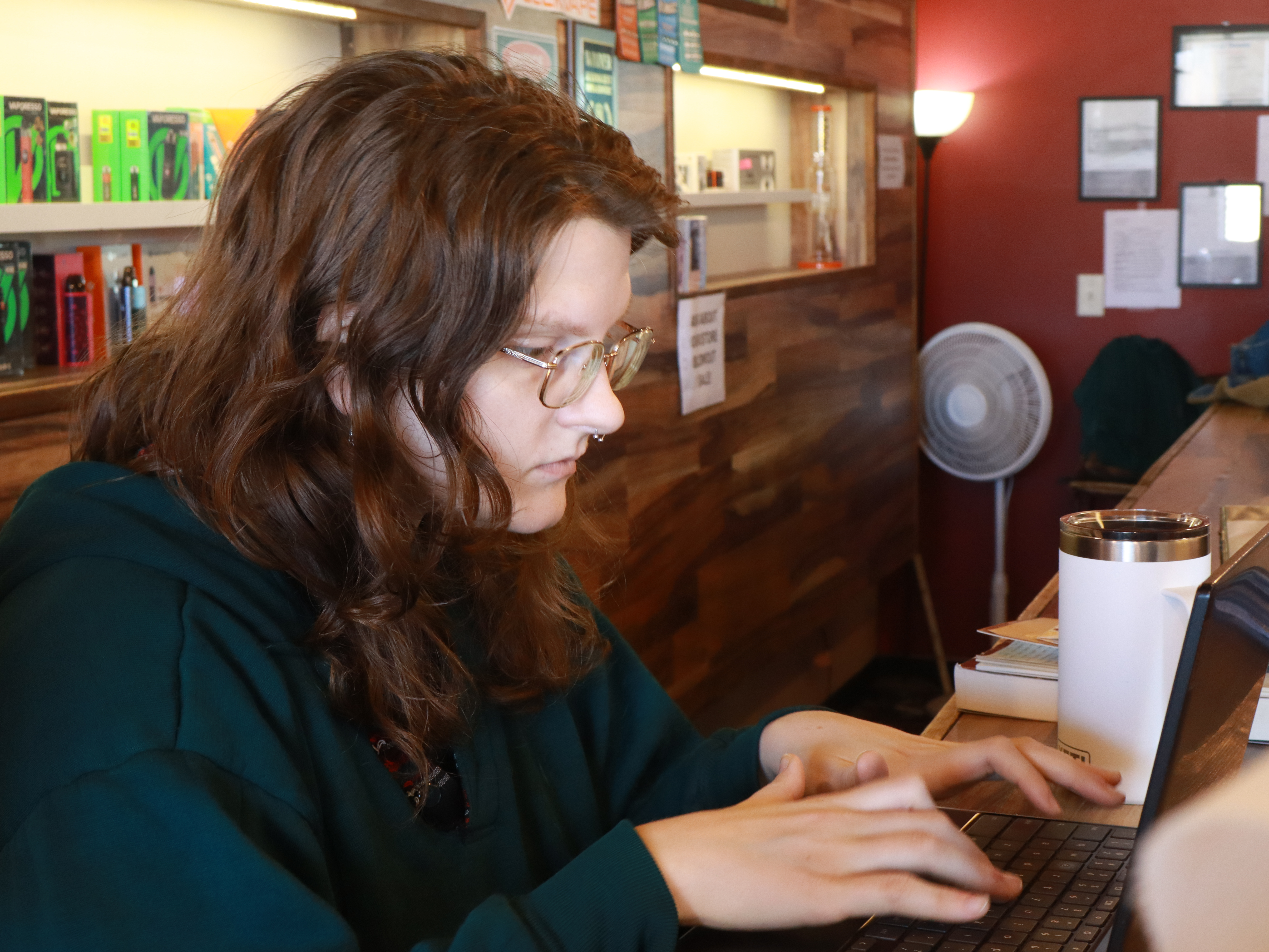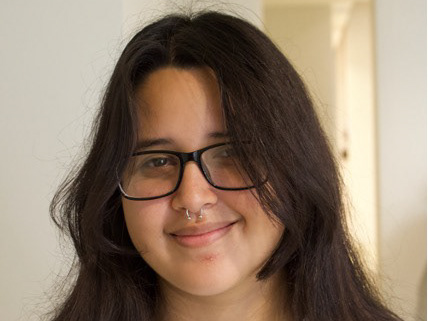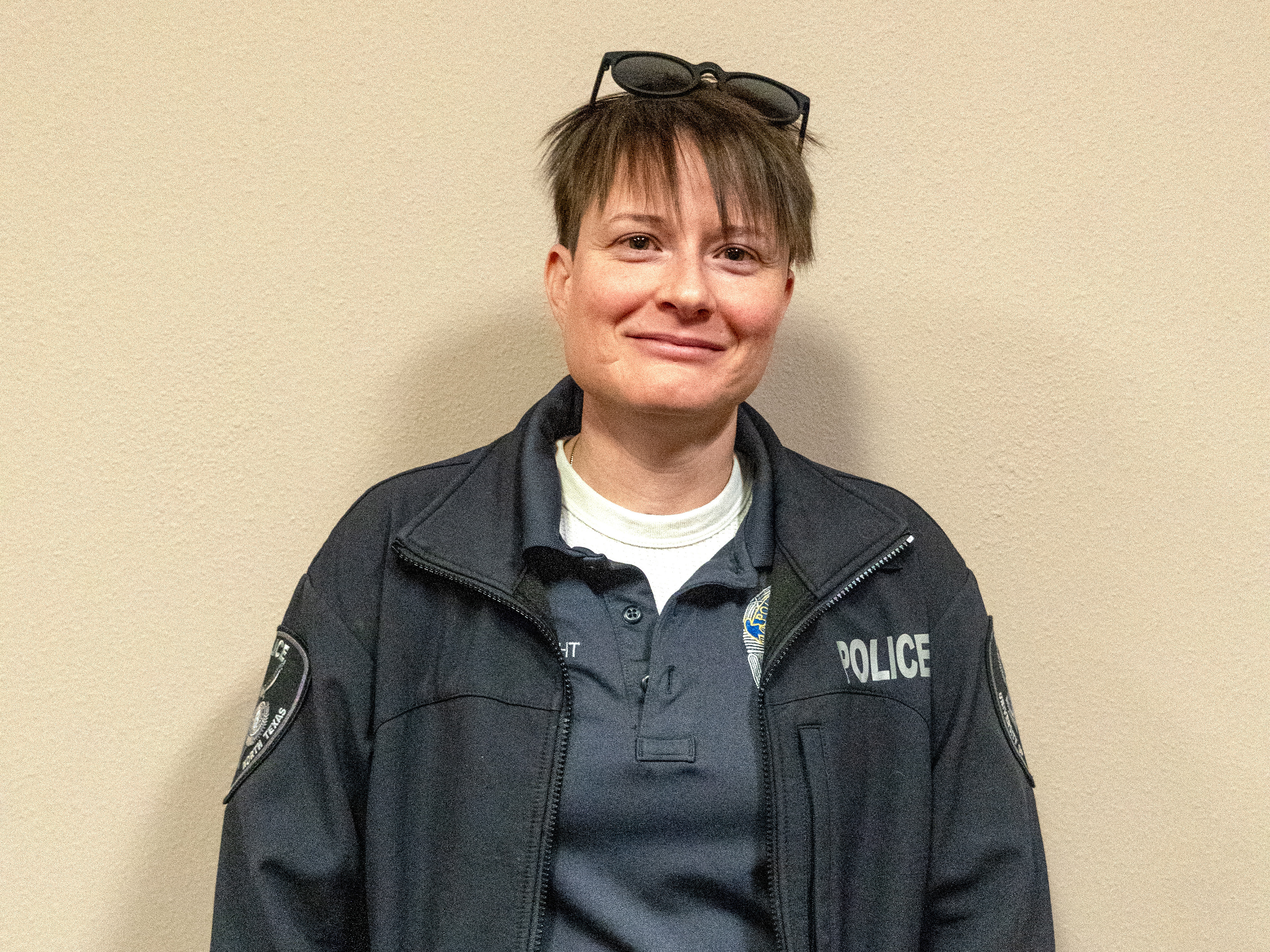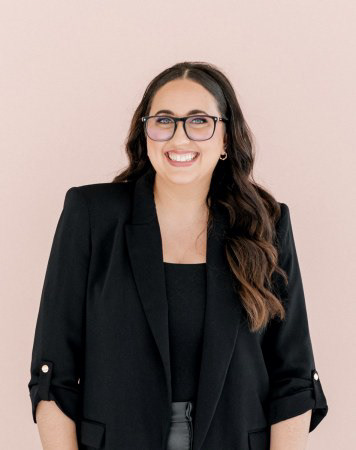
Ametis Bassir, clinical assistant professor, said that she's motivated to help students work through eating disorders. Courtesy Ametis Bassir
In between the stress of overwhelming workloads and the common struggles of learning to navigate adulthood, countless young people in college suffer from eating disorders.
Ametis Bassir, a clinical assistant professor in the University of North Texas Department of Counseling and Higher Education, specializes in helping students with eating disorders.
“I get energized when I have students come to office hours to ask for resources, what books to read, and how to best support [them],” Bassir said. “I feel like it’s my duty now in this phase of my career to spread what knowledge I have about eating disorder treatment.”
Such disorders are occurring with younger and younger people, she said.
“The onset of eating disorders and body image concerns, over the last decade, has progressively been diagnosed younger,” she said. “Often, body image issues start in girls as young as 8-9 years of age.”
UNT student Z Spears said they received family pressure about food from a young age.
“Eat everything on your plate, even if you’re full!” Z’s grandfather would say. “Even if you’re about to throw up, eat everything.”
Z had a difficult relationship with food and their weight since they were a child. They had been told they look “anorexic” by family friends and their mom encouraged use of a scale.
Z developed an eating disorder as an adolescent. They still are triggered by comments people make during meals.
“If someone perceives me eating, I don’t want to eat anymore,” Z said.
In high school, Z would go into the yearbook room to eat so nobody would see them. When that didn’t work, they simply wouldn’t eat at all.
Z said things got better after coming to UNT for college, after being surrounded by less judgmental people and having a stronger support system.
“I actually eat lunch with people every day and no one’s made a comment about the way I eat or the things I eat,” Z said. “Other than the fact that I don’t know how to use chopsticks.”
Alejandra Rodriguez, another UNT student, said she developed her eating disorder during elementary school. When she was about 8 years old, she went to the beach with her family and wore a two-piece bathing suit. Her father called her fat, and that memory followed her to the point that she hasn’t worn a bathing suit since.
Her mother would count the calories in Alejandra’s meals starting at a young age, causing her to fear weight gain, she said.
“By the time I was in fifth grade, I remember constantly thinking about my body,” Alejandra said. “During every activity – I was on the playground thinking about sucking in. I was at lunch and I wouldn’t touch the food.”
Things only got worse when she entered middle school, as the comments got harsher and more frequent. By the time she entered high school, she said she was making herself throw up in the restroom, unbeknownst to her peers. During this time, she weighed as little as about 75 pounds.
When she got to college, she recalled she would go long periods of time without eating. Living in the dorms with no parental supervision, no close friends and very little support system meant she had nobody to hold her accountable for her eating habits. At one point, she said, she had to wear braces, since making herself vomit was damaging her teeth.
Things have improved over time. While she still struggles with her disorder, she is now married to someone who supports her and makes her feel seen.
“Having somebody really concerned for you helps you a lot,” she said. “I think I’m learning a lot of coping skills. I’m going to the gym, trying to focus more on health and not image.”
Body image struggles occur in all genders.
Bondurant Smith said he was in middle school when he started playing tennis and his coaches began loosely implementing an “athlete’s diet” for their players. Coaches made it clear that they would begin cutting players from the team who couldn’t adhere to the diet, going as far as to weigh players periodically.
Smith recalled that in high school the pressure became “hell on earth.”
“I just don’t think you take this seriously at all,” he recalled a coach told him. “You’re just lazy and you don’t take this seriously. I wish I’d have given your spot to someone else.”
Smith said the training resembled that of the military. Coaches criticized him when he fell short of their expectations and chastised when his body couldn’t handle it.
One coach was particularly excruciating and berated Smith for vomiting during practice on at least two occasions.
“They didn’t base it on skill; they based it on how fat you were,” he said.
Eventually, the mental strain became too much, and he quit tennis after his second year of high school. He developed an eating disorder during this time, making himself throw up once before realizing that it was easier to starve himself.
“What I struggled with after that was self-confidence and finding self-worth, because they just spent every waking second of practice trying to make you feel like you weren’t good enough,” he said. “I know some people are like, ‘if we do that, it pushes you to try and prove us wrong.’ But there’s a give and take with that.”
He also connects some of these insecurities with the rise of social media influencers, especially those who post images of their bodies, painting an unrealistic and inaccurate picture of what success looks like and how to get there.
“Inspiration is people who give you their whole story, unabashedly,” Smith said. “They share the woes of their story and the uplifting moments.”
Through the help of academic books, videos and presentations, awareness of body image concerns in universities has gotten better over time. Steadily, societal stigmas are being broken as more people come forward about their struggles, but there’s still a long way to go.
“Certainly, more empirical research can help progress education and provide more funding to programs,” said Bassir.
Meanwhile, Rodriguez said society hasn’t progressed fast enough.
“We need to be more open when talking about it,” she said. “I hate that people are so afraid to say the words ‘eating disorder.’”
This leads to one of the most difficult obstacles in people seeking help from eating disorders, which is a matter of accessibility. Accurate medical information can be hard to distinguish from the pools of misinformation spread on social media.
“It makes me nervous as a counselor sometimes when clients come in and say, ‘I think I have XYZ,’ and then I find out it was from a content creator on TikTok providing misinformation on mental health topics,” Bassir said. “That, to me, is dangerous.”
One solution to this would be an allotted time frame for eating disorder education. Bassir suggested National Eating Disorder Awareness Week, which occurs around February to March, when UNT could host panels, speakers, and provide on and off-campus resources.
There’s also the issue of financial accessibility. While some students may have health insurance to allow them to see dietitians, care providers and counselors, not all students have that financial stability.
“It suggests whether college campuses can provide free or pro-bono services for students who are in higher need,” Bassir said.
Despite the challenges, Bassir is motivated to help students in this avenue get the help they need.
“I get energized when I have students come to office hours to ask for resources, what books to read, and how to best support [them],” Bassir said. “I feel like it’s my duty now in this phase of my career to spread what knowledge I have about eating disorder treatment.”
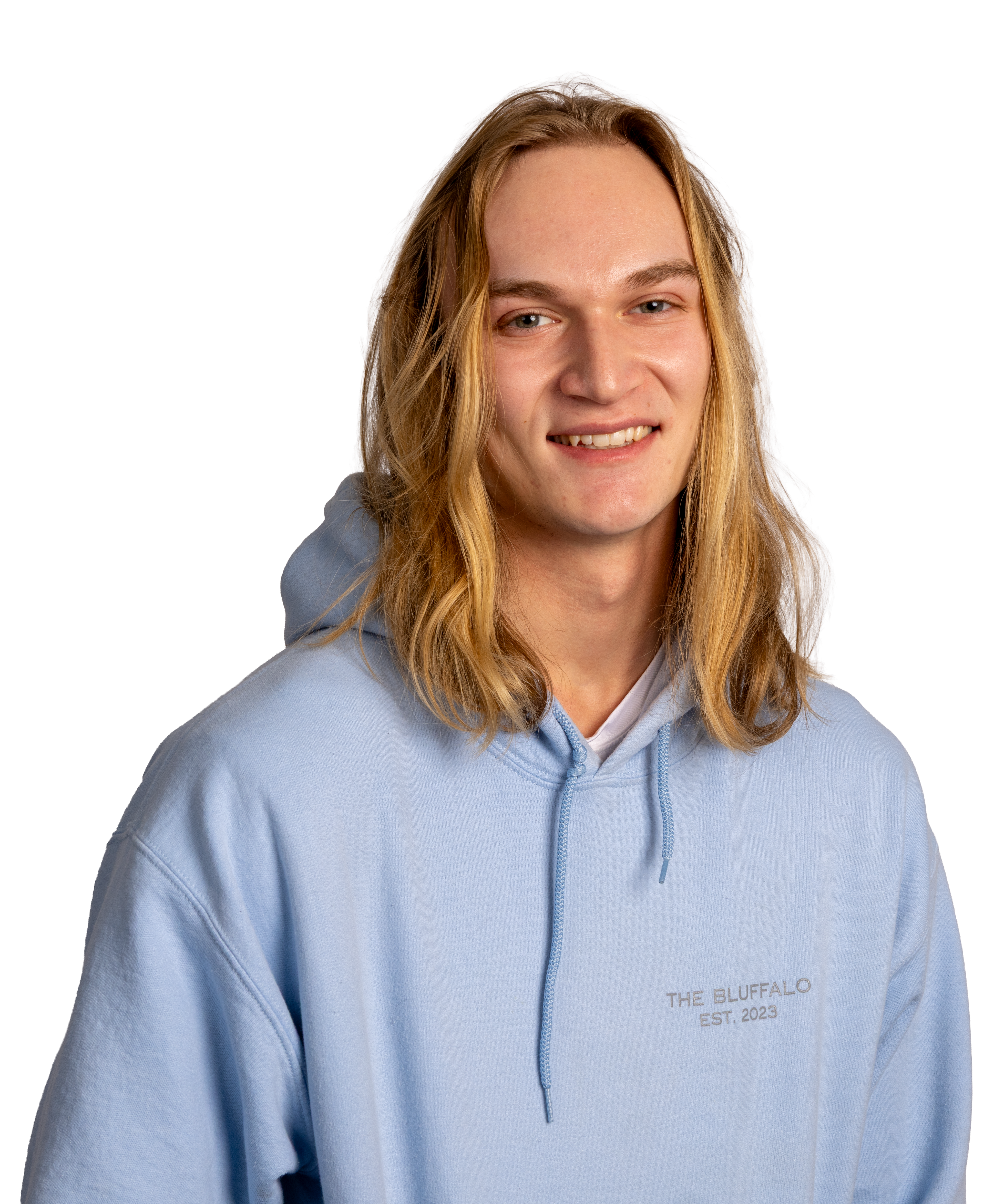
Jackson Craun
Jackson Craun is an undergraduate student at the University of North Texas with a major in Print Journalism and a minor in Spanish. With an interest in arts, specifically music, Craun has written several articles for the North Texas Daily and specializes in profiles and reviews. He’s set to graduate in May of 2027 and will continue writing about the North Texas community and looking for broader opportunities.