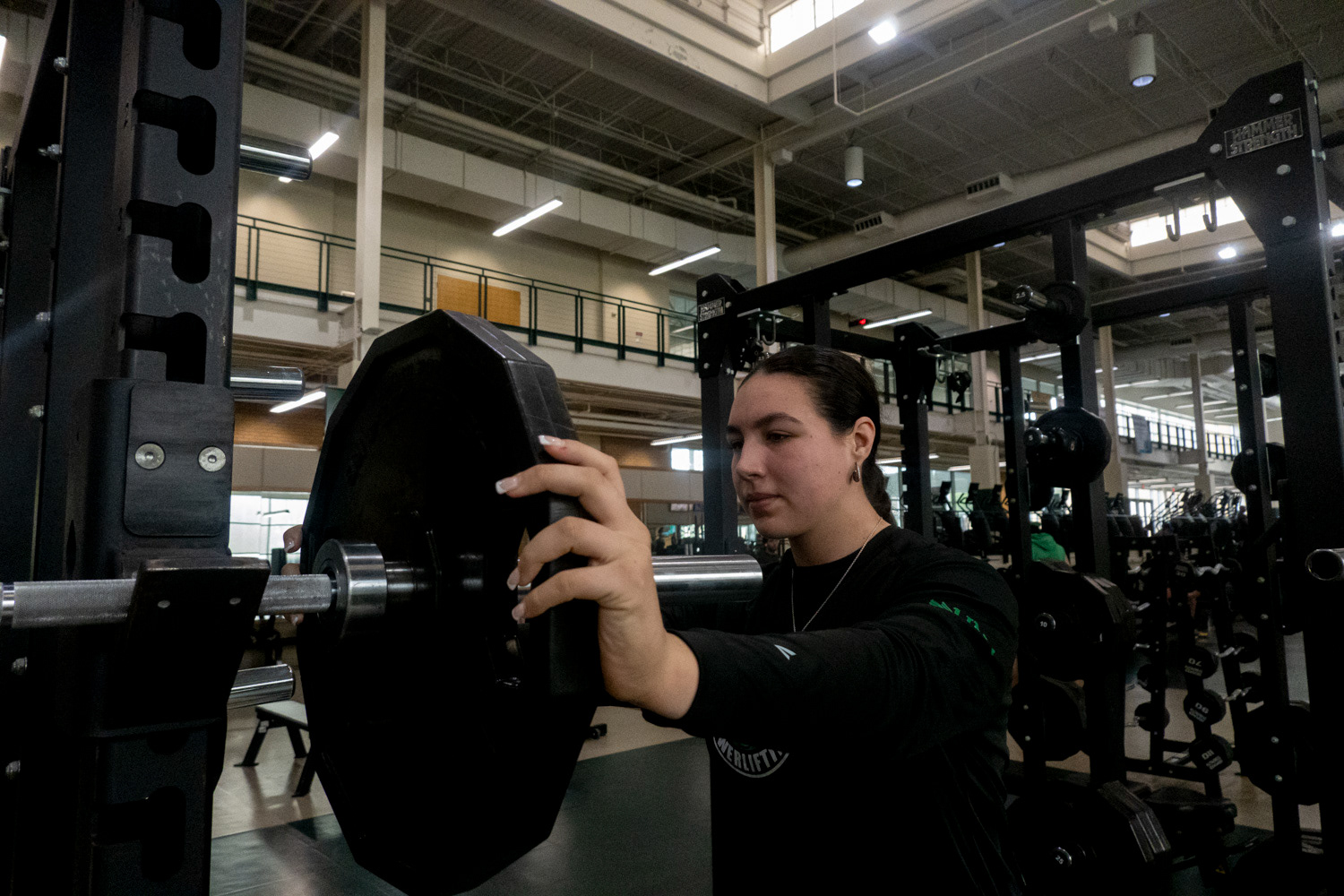
University of North Texas powerlifter Monica Bonilla slides a plate onto the bar at the Pohl Recreation Center. Diego Hernandez
Camus Tran feels the difference instantly when he breaks his routine.
Training has been his anchor for two and a half years, the part of his day that steadies everything else. When the University of Texas at Arlington powerlifter cannot lift, the rest of his life feels off balance.
“Yes, I’d say a lot of people go to the gym to de-stress or just enjoy working out,” Tran says. “Someone not training as frequently as they usually do can negatively impact their mental health if they use it as a source of distress or happiness.”
Strength sports promise control. A barbell loads neatly, plates slide into place, numbers climb one attempt at a time. That order feels like a lifeline when everything else is loud and uncertain, Tran says. The same routines that ground lifters can begin to unravel when progress stalls or when their identity becomes inseparable from their performance.
Across college athletics, the pressure is well documented. In the NCAA Student-Athlete Health and Wellness Study, which surveyed more than 23,000 athletes in 2022 and 2023, about one-third reported feeling overwhelmed “constantly” or “most every day,” and a similar share said they felt mentally exhausted at the same frequency.
Between 7% and 9% said they had felt so depressed in the past month that it was difficult to function. Academic stress, planning for the future and financial strain were the most frequently reported factors harming athletes’ mental health.
On college campuses, the NCAA has issued mental health best practice guidelines and now treats mental health care for athletes as part of basic medical support. Those recommendations call for coordination between athletic departments and campus counseling centers and for clear plans to screen and refer athletes when coaches or staff notice signs of distress.
Studies in journals such as American Journal of Men’s Health and Scientific Reports recommend that health professionals who work with lifters pay attention to signs like extreme dissatisfaction with size, restrictive dieting, compulsive exercise and use of performance and image-enhancing drugs.
They also urge sport organizations to treat those patterns as clinical red flags rather than proof of dedication.
At Blue Ridge High School, Jonathan Espinoza, 16, is only in his second year of powerlifting, yet he already feels the mental strain that shadows experienced athletes.
He shows up early in the morning before school starts to train despite late night shifts working at McDonald’s ending at 10 p.m. because he believes the routine is supposed to steady him, but the pressure builds in ways few people around him notice.
“It takes a lot to have the correct mindset and show up every day and do the right thing even when you are tired and do not want to,” Espinoza says.
Experience in the weightroom, however, could begin even before high school.
Before he ranked among the strongest collegiate lifters in the country, before the 415-kilogram squat and the national podium finishes, Midland University athlete Brandon Ward was a sixth grader afraid of the weight room.
“It was honestly intimidating,” Ward says. “I had no idea what I was doing.”
Yet he kept showing up for football and then for himself. By high school, the gym had become the place where he felt most in control. Powerlifting gave him a challenge that depended entirely on effort.
That effort earned him what he calls one of the biggest moments of his life, an offer from Midland University in Fremont, Nebraska, with a scholarship tailored to powerlifting.
“I was overwhelmed with emotion, almost to the point of tears,” Ward says. “It felt like all the hard work, early mornings and long training sessions had finally paid off.”
Now 20, Ward is surrounded by lifters who push national numbers, and the pressure is sharper. Being away from home, competing in deeper divisions and constantly measuring himself against stronger athletes has taken a toll.
“Seeing other lifters in my weight class who are stronger than me can be frustrating,” Ward says. “I’ve always strived to be the best, so it’s hard when I feel like I’m falling short.”
Ward has watched that pressure tip people into places they never expected to go. He trains in a collegiate program where lifters are subject to random drug testing, and in the past few years, he says he has seen several athletes fail those tests.
“There is a long list of banned substances, and I have seen about five athletes test positive,” he says. “It reinforces the importance of competing clean and relying on hard work instead of shortcuts.”
Tran notices a different version of the same struggle. As more lifters share highlight videos, physiques and transformation timelines online, he says body image standards have shifted into something harsher.
He sees younger lifters comparing themselves to people with rare genetics that give them physical advantages or years of experience, and it creates a quiet dissatisfaction that grows over time.
“Body dysmorphia has gotten worse,” Tran says. “People compare themselves to outliers.”
At Blue Ridge High School, Espinoza notices the mental fatigue that comes with constantly trying to improve. He says from his experience, it is easy for burnout to spread when lifters chase numbers faster than their bodies can handle.
University of North Texas student Monica Bonilla, who has been powerlifting for six years, knows that cycle well. She remembers her earliest struggles with body image and how shifting her focus from being thinner to being stronger helped her progress.
Yet even now, she feels the tug of unrealistic expectations.
“People see your heavy lifts online,” Bonilla says. “But they do not see the plateaus, the sleep you lose, the stress, everything outside the gym.”
She recalls cutting extreme amounts of weight during her freshman year at college, dehydrating herself to hit a number on the scale. What followed was exhaustion, a performance far below her usual strength and a lesson she still carries.
That experience changed the way she sees the sport. Even now she says powerlifting can make her feel like two different people depending on whether she is in off-season or competition prep.
“When prep gets heavy, everything else in your life feels heavier too,” Bonilla says. “It can break you down mentally if you are not careful.”
Tran says the structure itself still feels like a form of protection against the weight of burnout or training gives him a place to focus his energy, and setting specific goals for total weight or a particular lift helps turn comparisons into something more manageable.
When he feels pressure or burnout creeping in, he tries to return to that long term view, reminding himself that strength comes in small increments and that plateaus are part of the process.
Espinoza admits that the schedule and the expectation to push through tired days can leave him mentally drained, but he says that when he is consistent, his body feels at peak performance and that sense of physical readiness improves his mood even when he feels worn down.
Ward copes with the mental strain of being away from home and comparison to others by anchoring himself to his faith and treating each day as a new day.
“When it comes to competing and going for a new personal record, I always take a moment to thank God and Jesus for giving me the strength and opportunity to be there,” Ward says. “Once I grip the bar and prepare to lift, my mind goes quiet. It is just me, the weight and faith that I can do it.”
Bonilla divides her year into two different selves. During the off-season she feels more relaxed, less focused on weight and able to enjoy training for its own sake. In meet preparation she feels the pressure build. Fatigue accumulates, questions about her weight class and her competition crowd in, and her mood follows the ups and downs of her lifts.
When she feels herself slipping toward burnout, she tries to remind herself why she started and to trust the work she has already done rather than chase dramatic last minute changes.
All four say that mental health conversations inside lifting communities still feel limited. Bonilla believes the topic is talked about more often when high profile athletes post about it, but within clubs and teams she feels most people keep their struggles to themselves.
Espinoza says it is “mostly quiet” even when lifters are clearly drained. Ward and Tran both say that social media has helped normalize some discussions, yet the dominant message remains focused on pushing through.
“Mental health is not talked about enough in powerlifting,” Bonilla says. “Most of us just deal with things on our own.”
Tran advises that when experiencing burnout by switching between short-term and long-term goals. Similarly, Ward says that athletes who do not meet their expectations should remind themselves that each lift is a challenge.
“Progress takes time, and not every day will feel like a win,” Ward says.” Focus on your mindset just as much as the weight on the bar.”
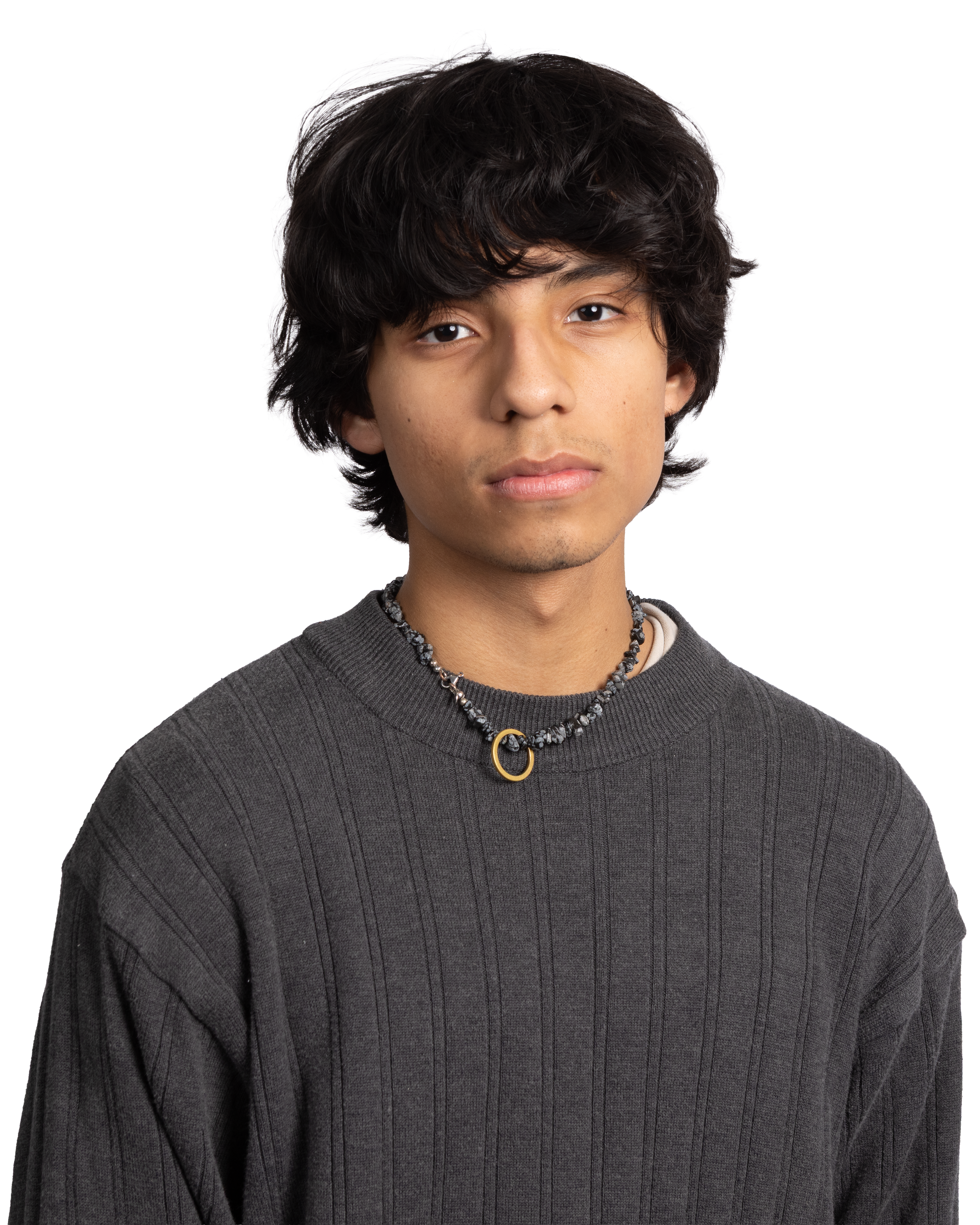
Diego Hernandez is a journalist based in North Texas. His work has been published in the Dallas Observer, North Texas Daily, Mvskoke Media and Denton Live. Hernandez is currently completing his bachelor's degree in journalism with a digital & print focus at the Mayborn Graduate Institute of Journalism. Following graduation, he hopes to pursue a full-time career in the journalism industry.