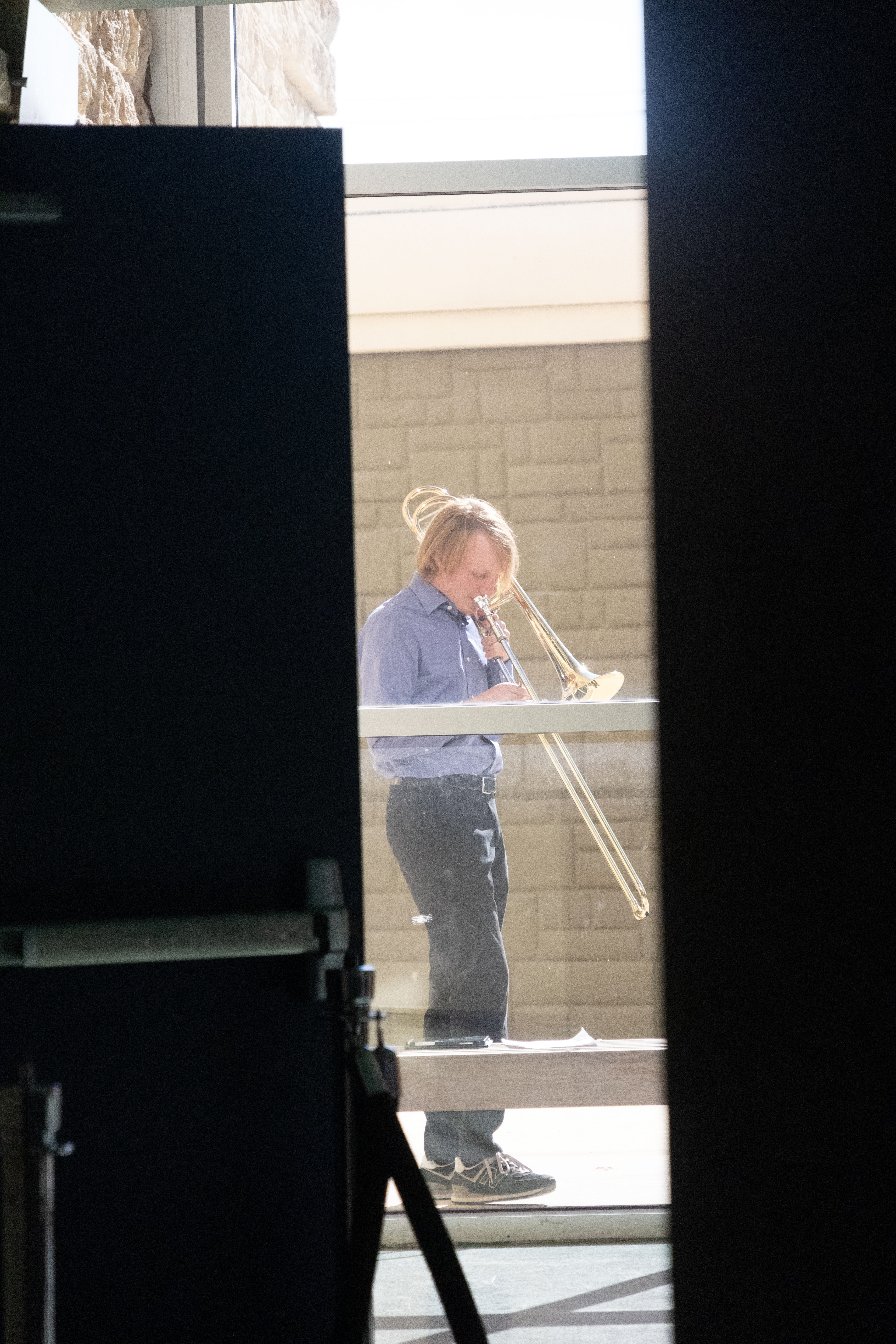
A UNT music trombone player practices outside of the Murchison Performing Arts Center. Ashley Gomez
The hallways of the University of North Texas’s College of Music bounce with the sounds of vocals and instrumental melodies. Dedicated students who wake up early in the morning to practice wipe their weary eyes as they try to understand the sixteenth notes coming at them in a rapid sequence.
Some have the ability to solely focus on music with no distractions, refining their skills and dedicating themselves to their craft.
Only one in six students who apply to the college are accepted. Students come from all over the world, but some come from area high schools. They must face the challenges of balancing the added workload from constant recitals and assignments.. The sheer number of talented musicians applying every semester makes the bar for mistakes low. And for students who are not familiar with the expectations of a serious performing institution, it becomes hard to adjust.
To aid in this adjustment, the UNT Performing Arts Medicine Fellowship was established in 2018 by Sajid Surve, an osteopathic professor at UNT Health Fort Worth. The fellowship is recognized as one of the few practices that focuses on therapy for musical students in the country, said Ricardo Fuentes, a representative from the fellowship.
“Most of the therapy provided is specifically curated by the therapist for the musicians,” Fuentes said. “They all know the pains and obstacles since they too were once in these students' shoes.”
The fellowship is based in the conservatory on the UNT campus, specializing in physical therapy and promoting ergonomic alternatives for music players. Most of the therapists are past or present musicians who know the ailments associated with specific injuries and how to treat them properly.
Former Green Brigade member Tony Acevedo experienced obstacles firsthand in the College of Music when his passion became a burden he could not carry anymore.
“It was so intimidating coming from a small high school band in Azle, Texas, to a grand symphony surrounded by talented people here in Denton,” Acevedo said.
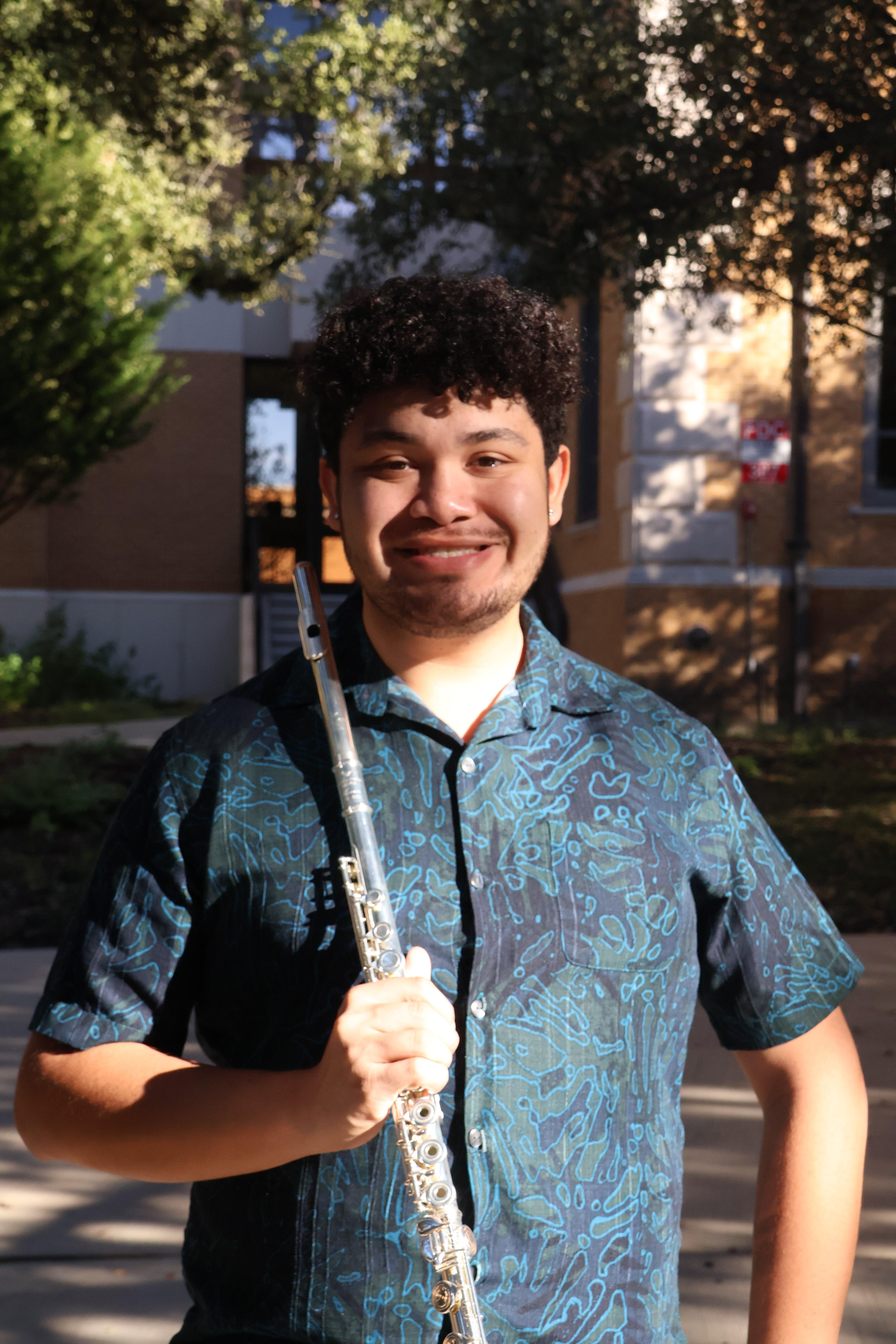
Senior Tony Acevedo poses in front of Sycamore Library. Though no longer apart from the Mean Green Brigade, his love for the flute is strong, and he continues to practice frequently. Ashley Gomez
Acevedo was a passionate flute player, stemming from his decision to start playing his sixth-grade year. Though having no prior desire to learn how to play, he chose the flute and never put it down until after his first year of college.. He said he felt as if the program was more like a survival show than an actual performing institution.
“The College of Music loves to overwhelm undergraduates with a bunch of pre-requisite classes and a high workload in order to weed out the weak,” Acevedo said. “Most of the people graduating from the college are two to three years late from their original graduation date just because they had to take so many courses to graduate.”
He decided to change his major to music education instead of performance.
Without proper support, musicians' performance can become stagnant and translate to them being undedicated to their craft, which for students who must hold themselves to a high standard, can become mentally debilitating, Fuentes said.
Therapists in the performing arts fellowship make sure to study the diverse types of instruments and the frequent injuries associated with those instruments extensively. Often, the therapist will travel to practice buildings and shadow the movements of students playing to understand the different ways an injury can occur, Fuentes said.
“For example, I don’t know how to play the harp,” Fuentes said, “but because I have studied how harps are played and the position the person must be in to play, I know people who play harps usually have bad shoulders and constant neck pain.”
Though the fellowship has only been around since 2018, it has collaborated with many institutions around the state to aid students and give lectures on how to better take care of their health. Texas Christian University and Texas Women's University have participated as well.
UNT fourth-year student Ezven Gonzalez said the program has helped him find solace in balancing his volume of work and keeping his social life alive.
Gonzalez is a music education major, previously being a biology major before he changed career paths. Though he is involved in the Mean Green Brigade, he originally came from TWU and played saxophone in the wind symphony before transferring.
The adjustment was humbling for Gonzalez. He felt as if he needed to prove himself to his peers as he was surrounded by aggressive competition that rivaled any other music program he had ever been in.
“I would leave my apartment before sunrise and get back when the sun was setting. On top of the long hours, the pressure to do well during concerts made my performance anxiety worse,” Gonzales said. “During one of the concerts, my anxiety got so bad I was shaking and vibrating in my seat.”
Though he felt like he was always falling behind, Gonzalez found a support system in the form of his friends he met in the Brigade. He credits them with helping him overcome his performance anxiety and remedying his insecurities about being in the College of Music. Gonzalez encourages incoming students to find their own support system as the constant practices and workload can be an unsustainable environment prone to make students feel like they do not belong.
“Make friends and find your people," Gonzalez said. "Yes, you are in a highly competitive program, but the College of Music is so inspiring and makes students improve their skills when they see the talent that comes from the program. Enjoy it, you made the cut!”
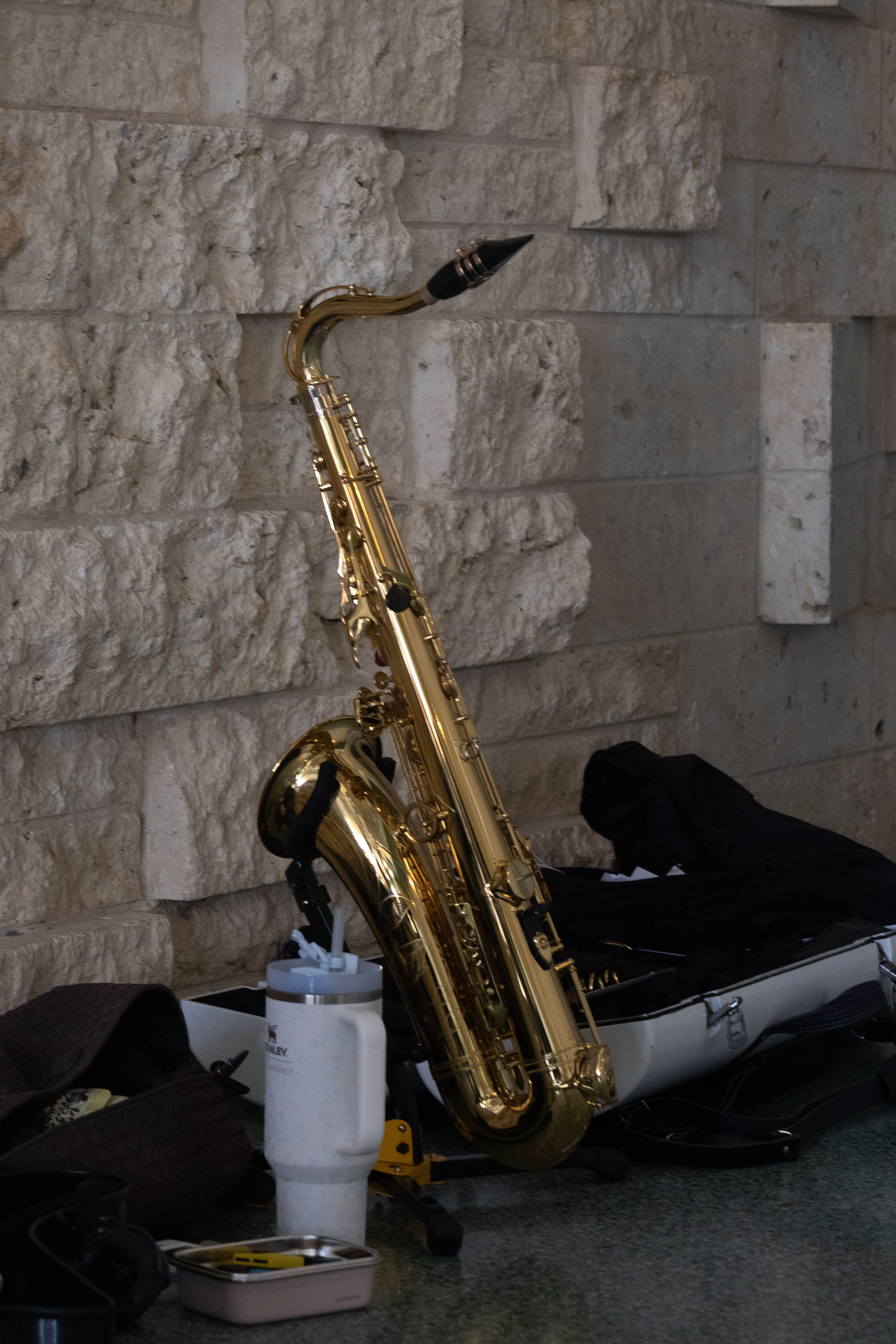
A lone tenor saxophone sits in the Murchison Performing Arts Center. Ashley Gomez
According to the frequently asked questions section in the College of Music admission questionnaire, students must audition no matter what area of expertise they are focusing on. The audition process comes in two rounds. Applicants must submit a preliminary audition video as a determining factor for their chances of getting an in-person audition.
Students must show their expertise to be accepted into the institution; the College of Music already expresses early that before students enter the program, it has high expectations.
Acevedo noted that professors and teaching assistants are not to blame for the heavy workload undergraduates face.
“Most of them were musicians too and are flexible with giving assignment help and scheduling office hours,” Acevedo said.
Fuentes urges students to take care of themselves as their well-being reflects their performance and how they present themselves on stage, especially their mental health. He notes that students who fail to look after their mental health tend to neglect making friends, eating well, and staying active. Though the fellowship provides physical solutions, it holds specific lectures about the importance of mental stability and its correlation to your overall health.
“We understand how much passion and love you pour into your instruments, but you are the fundamental piece to your art,” Fuentes said. “People love art, but it’s time we start appreciating the ones making the art.”

Ashley Gomez is a freelance journalist based in the Dallas-Fort Worth area. Her work has been published by the Denton Record Chronicle. Her photography and videos have also been used for advertising businesses around Denton, Texas. She is currently completing her Bachelor of Arts in Journalism with a concentration of photojournalism and a minor in political science. Gomez plans to graduate with her degree in December of 2026 and plans to continue her career as a photojournalist in the political realm.