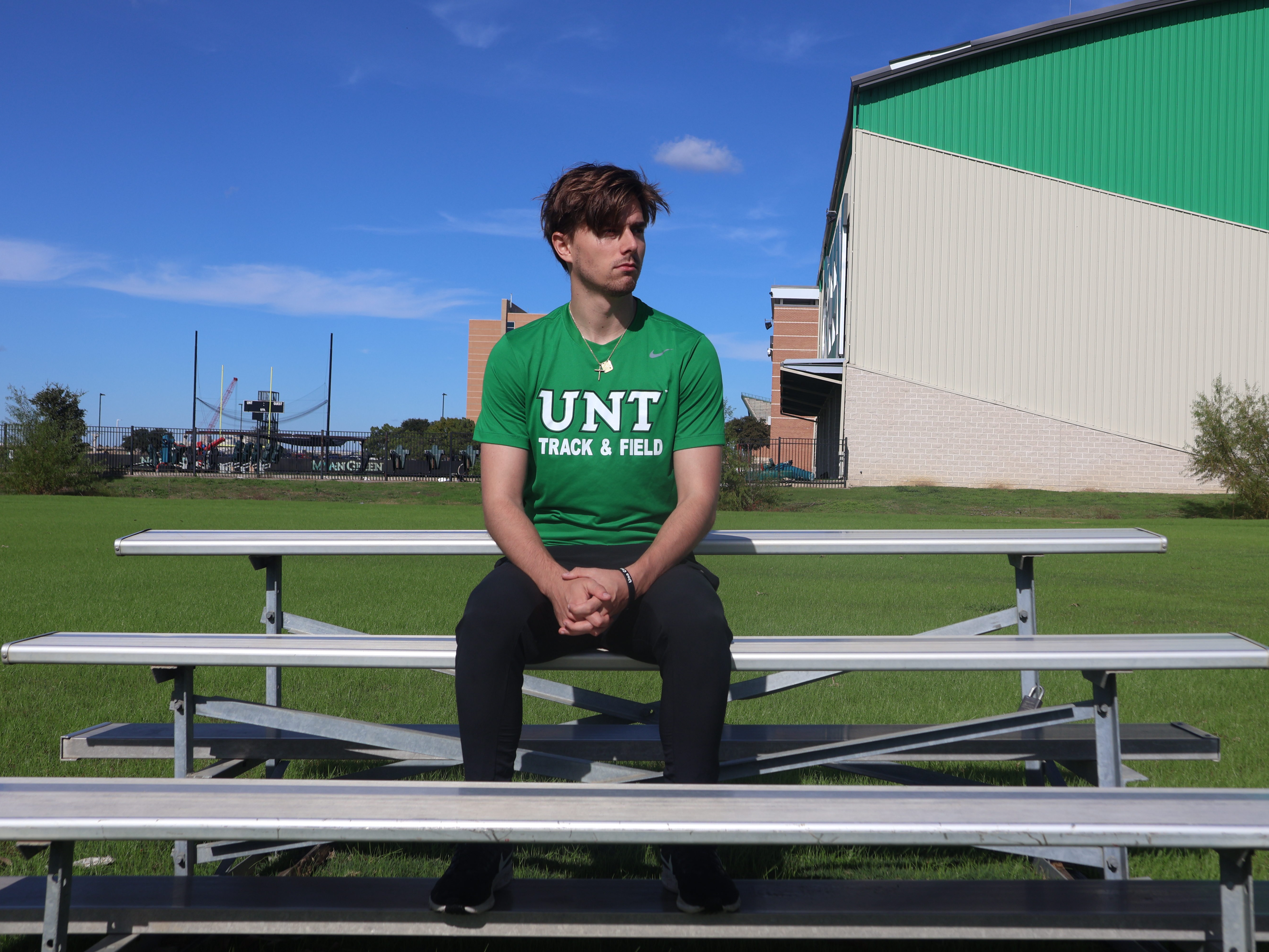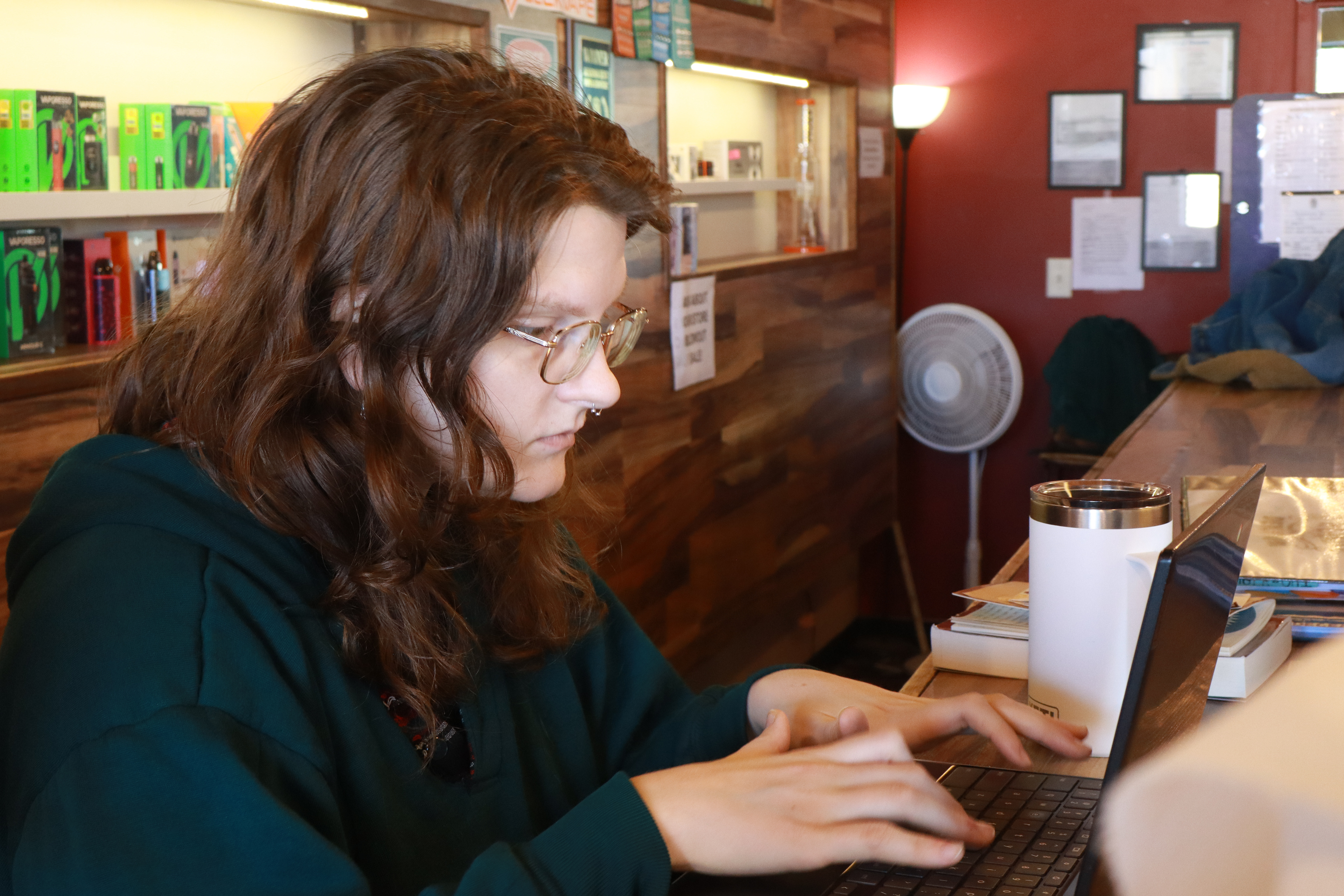
Shelby Griffin, a 27-year-old student at the University of North Texas, spends her days at work working on school assignments. Shelby has recently returned to college in an attempt to finish her Bachelors of Liberal Arts. Bondurant Smith
The college experience for many is the start of a journey into self-discovery, their first chance at being confronted with the challenges of adulthood. However, for some students, college is not a pleasant journey, but a struggle to determine what is more important: life or school.
For 27-year-old University of North Texas student Shelby Griffin, the journey has been long and complicated. Griffin first attended Tarrant County College in 2015. Like so many before her, the first taste of adulthood was bitter.
“I went to TCC for like two or three years, very noncommittally though," Griffin said about her first time attending college. “Back then, because I was younger, I didn’t care about school as much, so if I was overwhelmed with work and school, I would just decide to skip class.”
Griffin, who has worked in the service industry since she was 15 years old, felt no issue with skipping classes to pick up extra shifts. The consequences of choosing work over her education bore no weight at the time. Eventually the struggles of everyday life began to outweigh her desire to remain in school. Family offered her little in the way of assistance and she was left alone to cope with the challenges of the real world. Eventually with seemingly no other choice, Griffin dropped out of school to work full time.
She returned at age 25.
Griffin’s experience is not unusual. For non-traditional students returning to the fold of college after dropping out, the readjustment can be a difficult process.
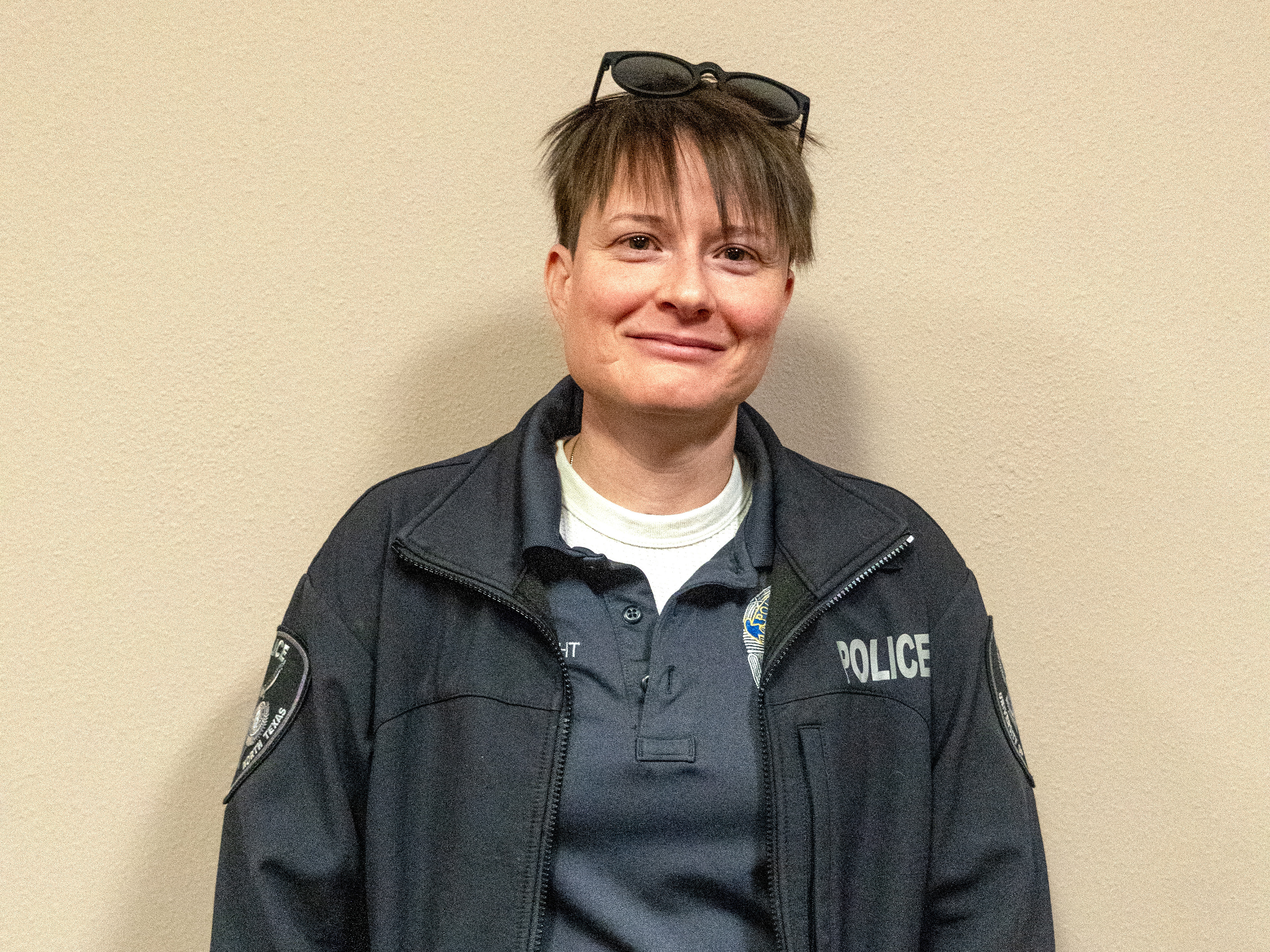
Such students find they need to set priorities, said Bethany Evans, executive director of The University of North Texas’ Counseling Services.
Often when a student is working full-time while also attending classes full-time, it comes from a place of necessity and sometimes things like bills, family, and other responsibilities come first.
“There’s challenges with being fully connected and engaged with the university sometimes,” Evans said.
Students face many pressures, including money, family responsibilities and work, said UNT Dean of Students Laura Smith.
“If let’s say you’re already having an issue managing both work and school, then just one thing happens and now you’re having to miss class because of whatever,” Smith said. “So, we can try and help by maybe reaching out to faculty and this student is in crisis and needs some academic flexibility.”
For students at UNT several resources and outreach programs are available for assistance including the Care Team, UNT Counseling Center, and UNT Money Management.
While college is primarily intended to obtain higher education and certifications in certain fields, it also presents students with unique opportunities for long lasting connections and unforgettable experiences. When students become so preoccupied and consumed with outside responsibilities, they lose the chance to participate in any of the extra activities on campus, Evans said.
“You don’t have the extra time to just kind of be on campus and kind of be emerged in campus life,” Evans said. “And that can be very isolating.”
After taking a break for six years, Griffin said she decided to try school again and enrolled at UNT. While she does look forward to finally finishing her degree, jumping back in after these years presents her and others in similar situations with challenges, a fact she acknowledges.
“My first semester was very hard,” Griffin said. “And that’s partly because I was still trying to balance everything I had been previously, but also after I had been working for that period of years, I had kind of got set in a way of doing things or, like, understanding the world.”
For 25-year-old Kelcee Bernard the choice to venture back into the world of higher education is an enticing one, but one she feels she is not ready to make.
Bernard started her college education in 2018 at Stephen F. Austin University in Nacogdoches, Texas. Her time there was short lived. After just attending one semester at SFA, Bernard withdrew due to severe money constraints.
“My FASFA aid was nowhere near enough to cover the school payment” Bernard said about her reasons for leaving SFA. “They had split my discernments so unevenly that I literally had no way of paying for that semester.”
Bernard’s mother ended up needing to help her pay $3,000 just for that one semester, and it was something the pair could not afford to do again. Her mother suggested she move closer to home and attempt to find a school that was more affordable. Bernard eventually decided in the spring of 2019 to transfer over to Collin College in Plano, Texas.
While attending there, Bernard lived with her mother and managed to pay for school without any financial assistance, by working full time in the retail industry. After two years Bernard obtained her Associate of Arts, but she had no desire to stop there. She eventually enrolled at UNT for the fall semester of 2021. However, two years into her pursuit of a journalism degree, life flipped upside down for Bernard.
“Life just kind of came crashing down all at once,” Bernard said. “I had been living with my boyfriend at the time, which helped with bills and responsibilities, but then that ended.”

Bondurant Smith
Bondurant Smith is a Journalism Student at the University of North Texas. He has an Associates of Liberal Arts and is currently in the process of obtaining his Bachelor of Arts for Journalism. Smith has covered local sporting events, such as local softball and soccer teams as well as local MMA events. He will graduate in the Spring of 2026.