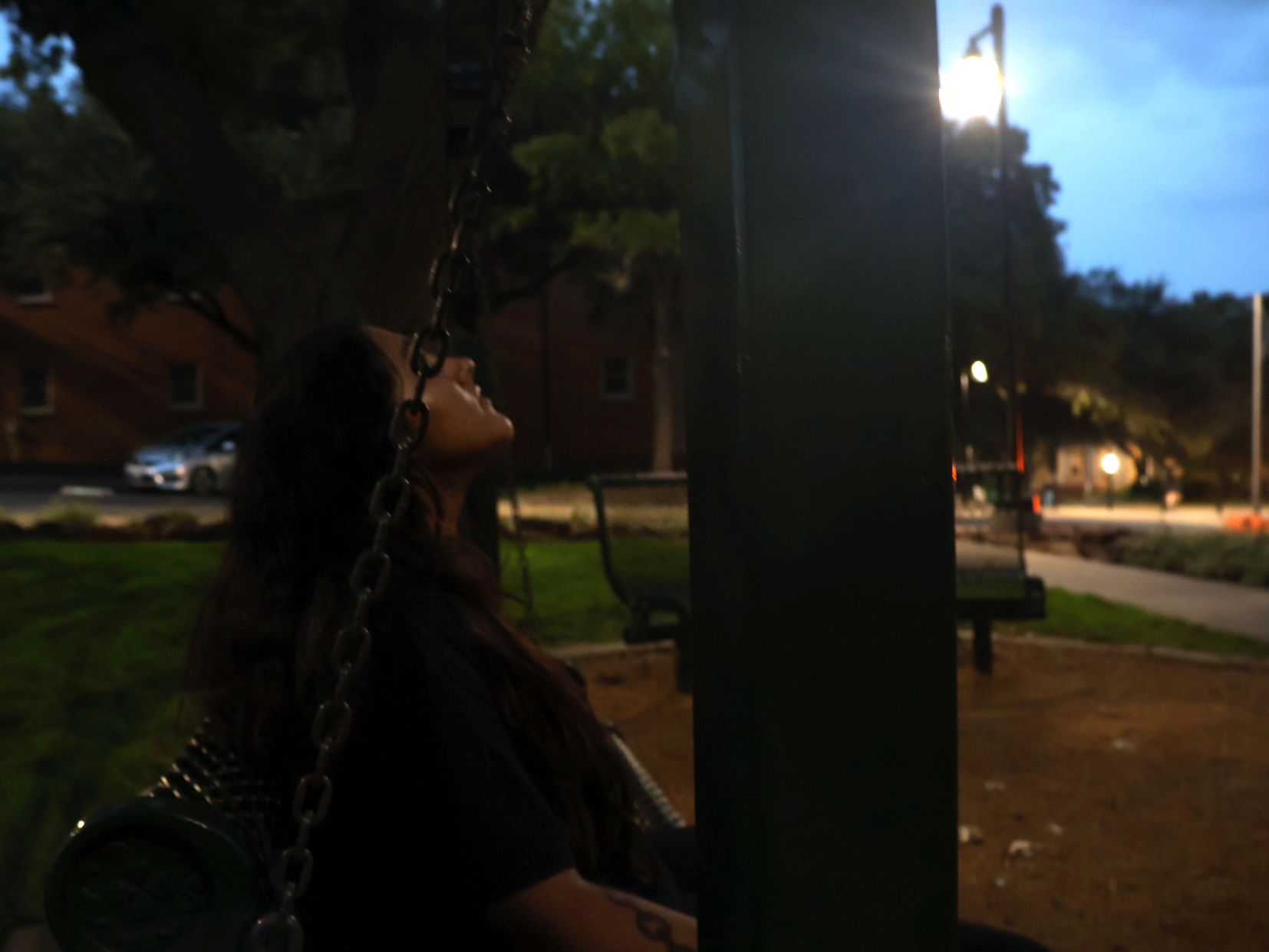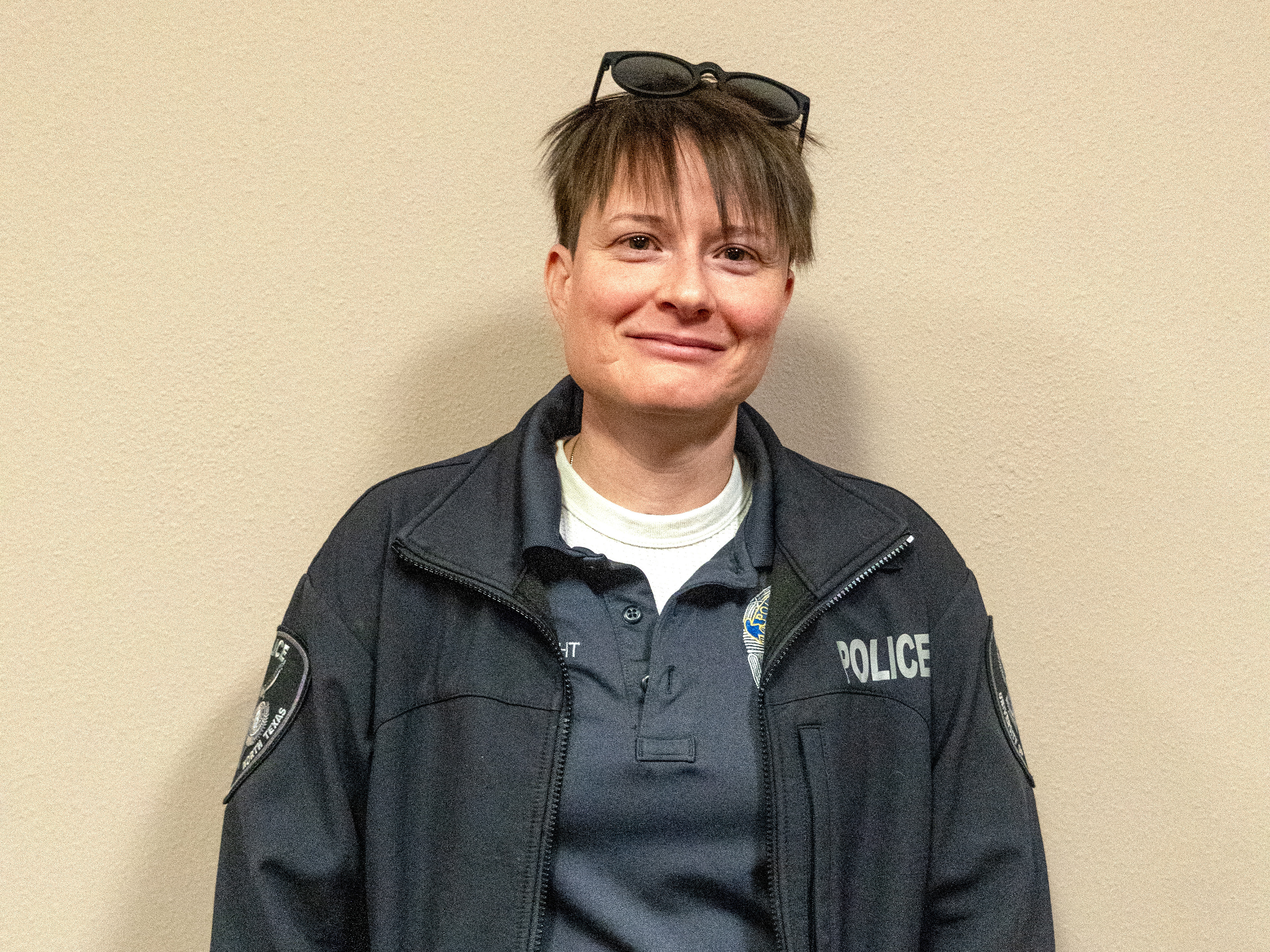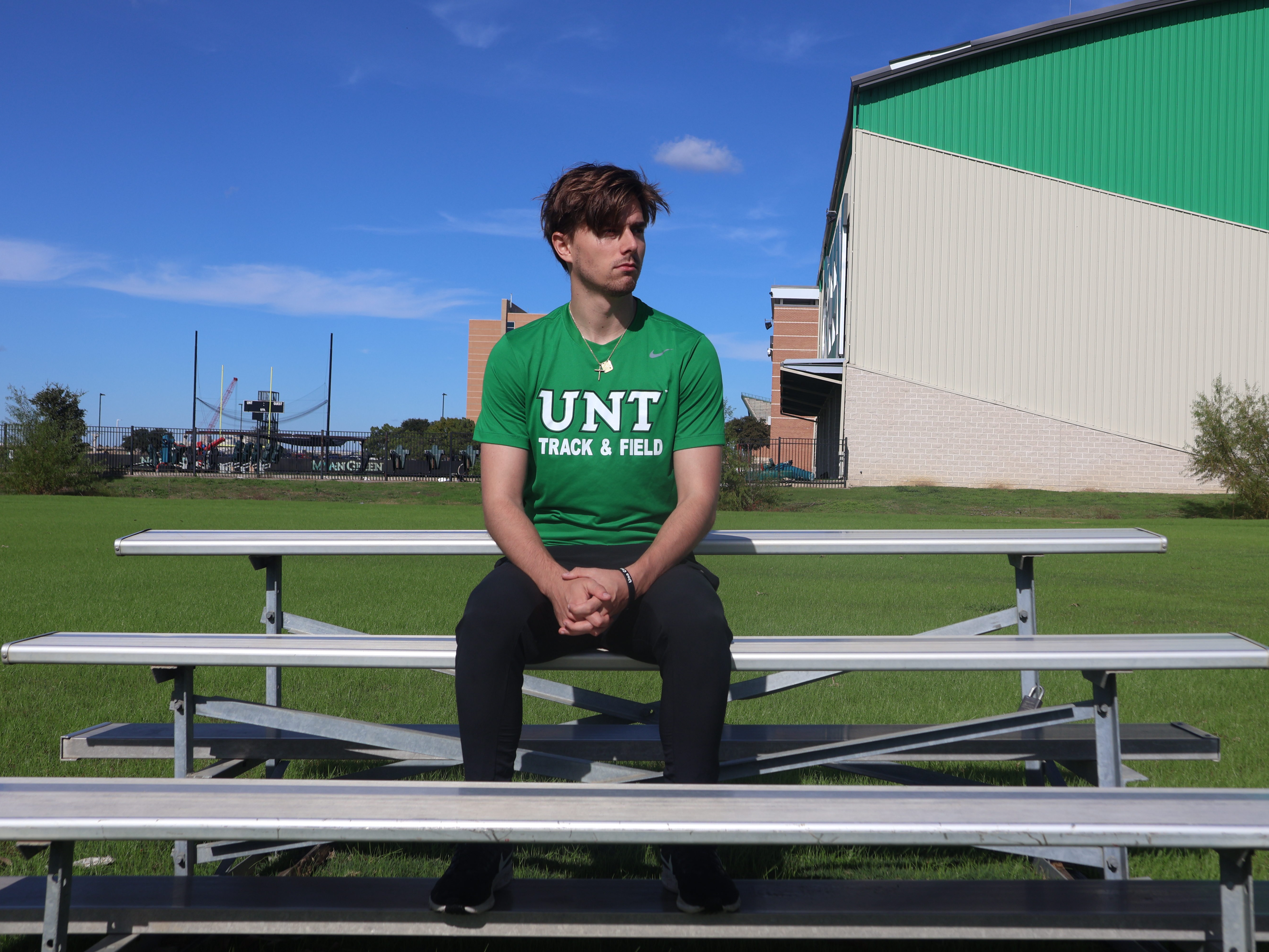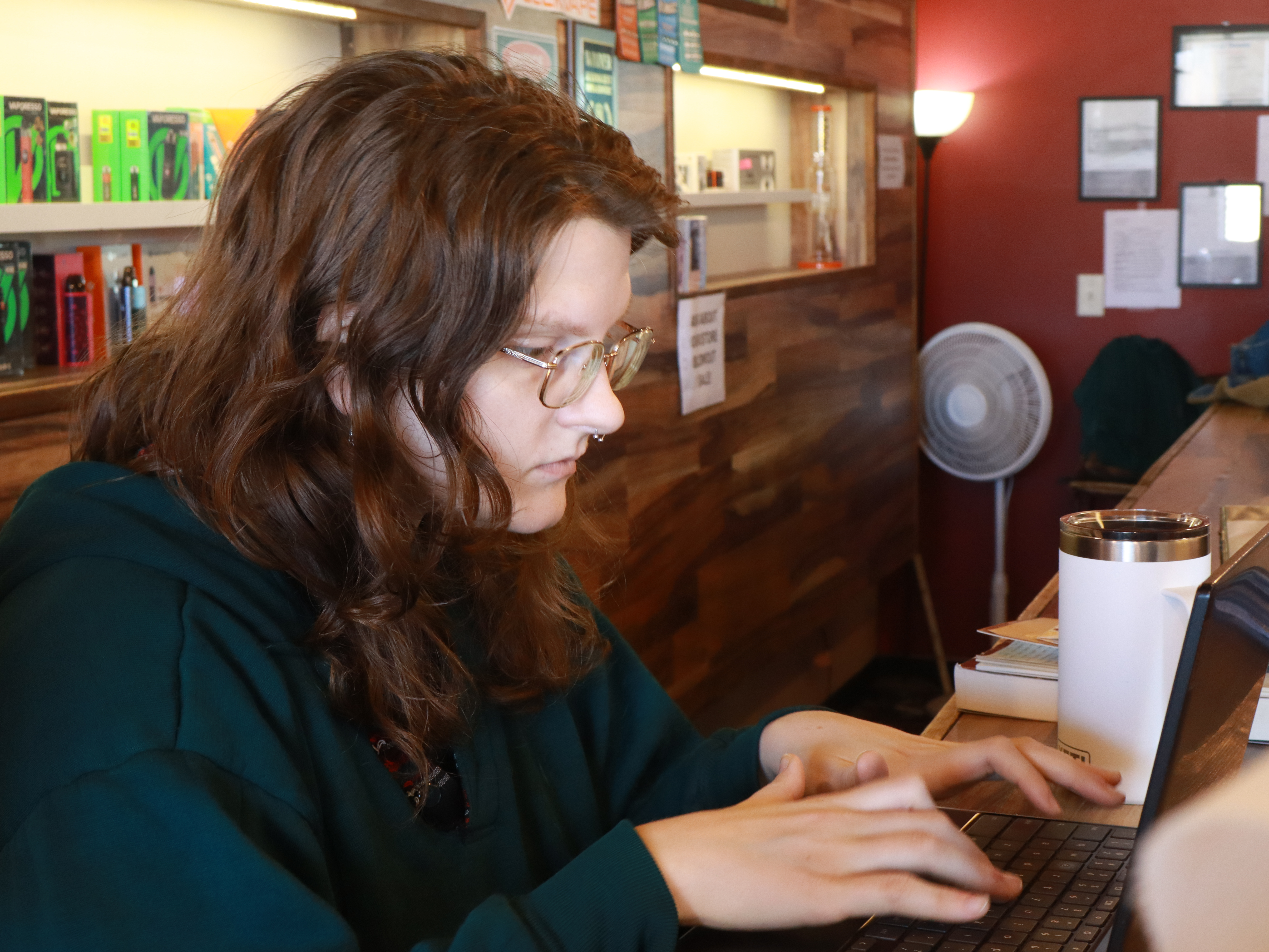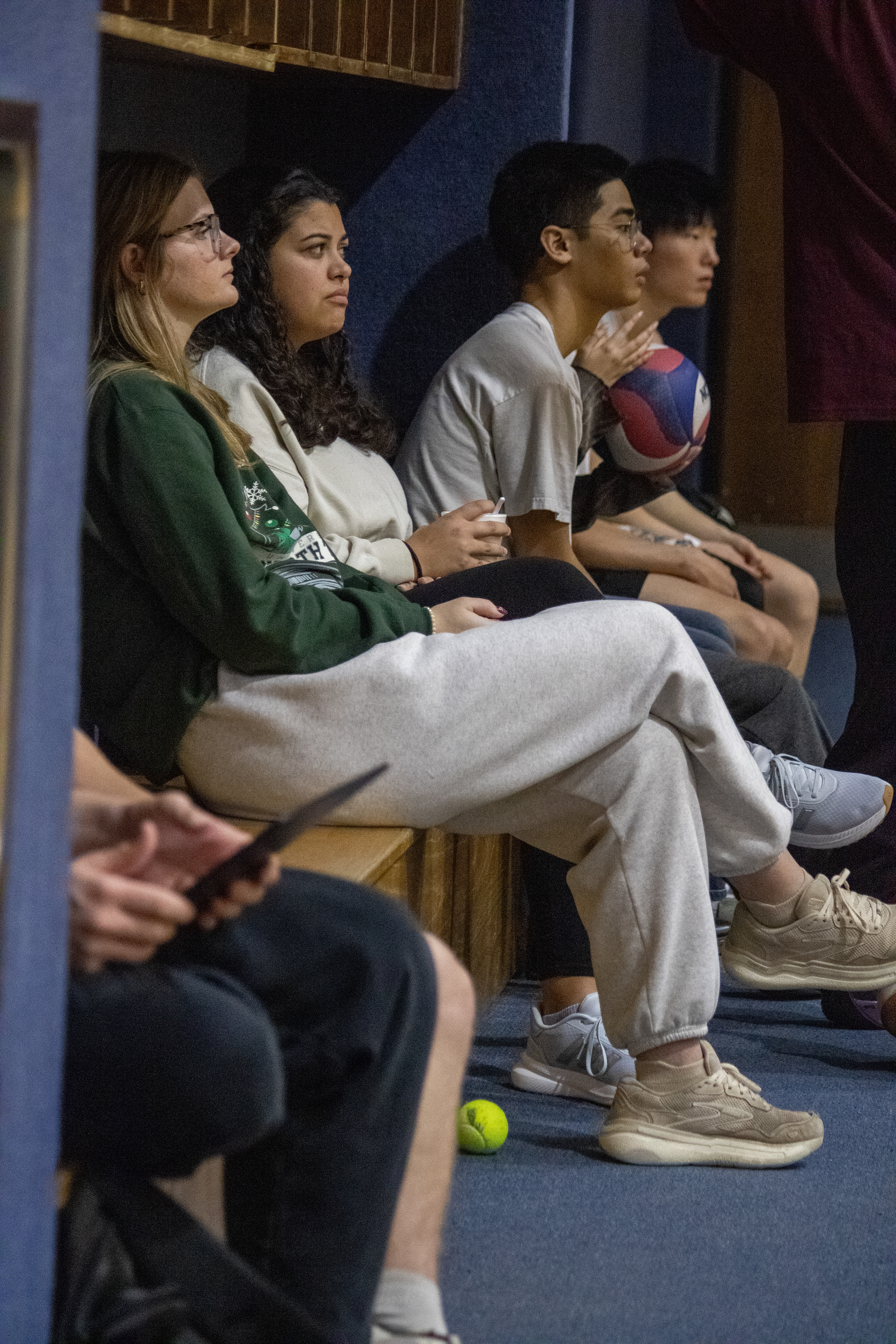
Zoe Taylor (second from left) watches as friends play volleyball on Dec. 7, 2025. Coralynn Cole
Sports fans know the thrill of a last-second goal, a buzzer-beater shot, or a tightly contested match point. But in every one of those moments stands a figure whose presence is essential yet often resented: the official.
For many athletes, coaches and spectators, referees serve as the invisible framework that keeps the game fair. For the referees themselves, however, the job is neither invisible nor simple — and the mental health cost of the role remains widely ignored.
Across interviews with youth officials, a collegiate tennis umpire, and a researcher who studies motor behavior and stress, one theme is unmistakable: officiating is physically demanding, emotionally heavy, and socially isolating. These pressures aren’t just inconveniences — they shape careers, self-confidence and, in some cases, whether officials stay in the field at all.
Russell Luna, who officiates tennis from junior tournaments to Division I college matches, has seen the intensity firsthand.
“One time, I was chased into a shed by angry parents,” Luna said. “They were mad because I overturned a call.”
He isn’t exaggerating. In tennis, officials often work alone, expected to make fast judgments amid 140-mph serves and players who know how to exploit hesitation. For new officials, the initial shock isn’t the rulebook — it’s the environment.
“At the junior level, the biggest challenges are dealing with the verbal abuse from parents,” Luna said. “You’re learning conflict resolution while people are yelling at you.”
Luna says burnout is common, especially for officials who rely on the work for income and officiate hundreds of matches a year. He prevents burnout by intentionally carving out time away from the courts each week.
“Sometimes you just need to be at home and do nothing, or do something away,” he said. “You have to let your mind rest.”
Despite this, he said little of the broader sports conversation includes officials’ mental health.
“Officials don’t necessarily have an outlet,” Luna said. “Organizations talk about it, but fans and the general culture often ignore it.”
If fans think officiating means standing around with a whistle, they’re wrong, said Andrew Colombo-Dougovito, a UNT associate professor specializing in motor behavior and stress.
“In many sports, referees are right in the mix of all the action,” he said. “They have to move constantly while also making cognitive decisions. It’s layers upon layers.”
He recalled rugby referees who run six or seven miles per match just trying to stay with the play. Physical exhaustion can blur judgment — and exhaustion is unavoidable.
“The more we do physically, the more mentally draining it can be,” Colombo-Dougovito said. “You’re trying to track what’s in front of you, but also what’s happening elsewhere.”
Then, add spectators.
“It’s easy to yell from the stands,” he said. “Umpires shouldn’t have to be police-escorted out of the Super Bowl.”
According to Colombo-Dougovito, the rising legalization of sports gambling raises the stakes dangerously.
“Referees may now be the difference between you going broke or making it huge,” he said. “I don’t see good outcomes coming from that.”
Despite all this, he says almost no academic research focuses on officials' mental health.
What gives him hope, however, is society’s broader shift toward mental-health openness.
“Athletes speaking up creates space for conversations in other areas — including officiating,” he said.
For younger officials working youth sports, the emotional toll starts early — sometimes immediately.
Sydney Adams, who started refereeing soccer at 16 and now serves as a field marshal overseeing other referees, remembers exactly what it felt like to be new.
“When I first started reffing, I could not stand up for myself whatsoever,” Adams said. “I would let the coaches make the calls for me.”
Now 20, she supervises the youngest referees and handles field-side conflicts.
“A lot of players and coaches don’t know the rules,” she said. “When a ref calls something, they get mad, and it puts a lot of pressure on referees — especially the ones who are 15.”
One moment sticks with her: a teen girl ref working an easygoing U8 match.
“There was a handball she didn’t call,” Adams said. “Parents lost their minds. She walked off the field crying. That was her last game of the season.”
Adams eventually convinced her to return the following year, starting her back at the youngest levels to rebuild confidence.
“I told her, ‘We’ll work your way back up. We’ll be there on your fields. If someone even raises their voice, we stop it right there,’” Adams said.
She credits mentorship — older referees stationed nearby, offering guidance — as the reason she didn’t quit herself.
“The support I had truly helped me grow,” she said. “They always told me, ‘If you don’t know, ask.’”
Without mentorship, many young refs simply quit.
“We had one ref who had four or five mentors and he still struggled,” she said. “He didn’t care anymore. Eventually, he just couldn’t be a referee.”
Where Adams found support, Zoe Taylor found isolation.
Taylor officiated recreational soccer for two seasons but left feeling drained and defeated.
“I didn’t feel like I was in mentorship,” Taylor said. “No one was telling me how to improve. I’d get yelled at for doing something wrong, but no one guided me.”
Without consistent feedback, she second-guessed every whistle.
“I definitely doubted myself a lot more and lost some confidence,” Taylor said. “After games, I’d be exhausted. I didn’t want to do anything else because I’d been yelled at for an hour.”
The break-even point came when she realized officiating was taking more than it was giving.
“It was a very negative experience,” she said. “I didn’t enjoy it.”
Taylor isn’t anti-officiating — she just believes the system fails its most vulnerable workers.
“If I had my boss come watch my games and offer feedback, it would’ve gone differently,” she said. “Mentorship would have changed things.”
Even now, as she studies coaching, her officiating experience continues to shape her behavior.
“As a coach, I’d be more conscious of what I call out,” she said. “They’re just trying their hardest.”
Across all four interviews, one point is clear: Officials need mentorship, respect, boundaries and reinforcement — not as luxuries, but as necessities.
Fans need to remember that referees are humans, not punching bags.
“I think younger people are more open about mental health,” Colombo-Dougovito said. “Maybe that will translate into how we treat referees.”
Referees ensure fairness in every sport. The question is whether the sports community will return the favor.

Coralynn Cole is a senior photojournalism major at the University of North Texas with a minor in Jewish Studies. She has previously worked with the NTDaily as a photojournalist and UNT’s mascot, Scrappy, as the social media manager. After graduating in the spring of 2026, Cole will be studying at New Orleans Baptist Theological Seminary with hopes of becoming an international media missionary.