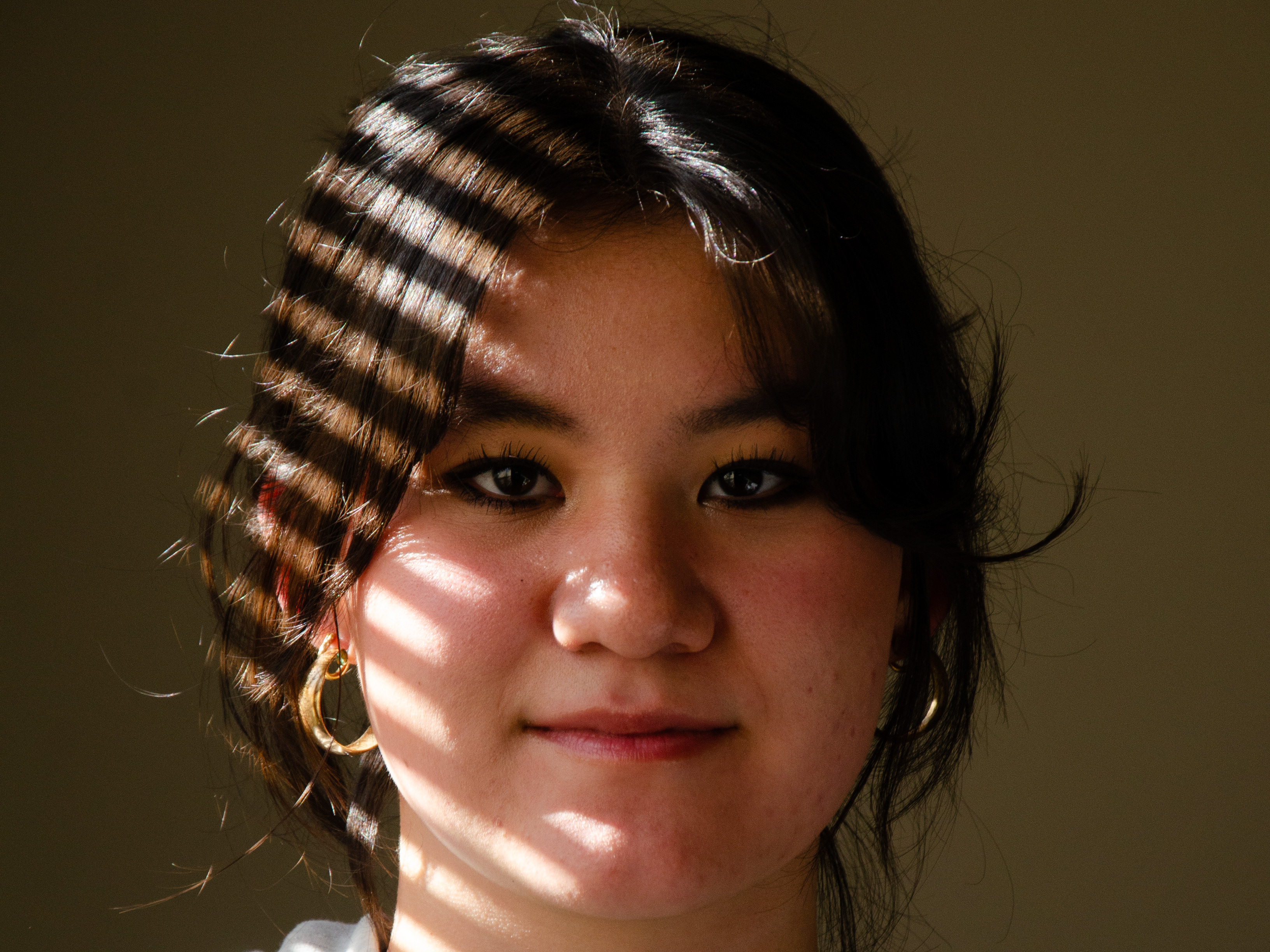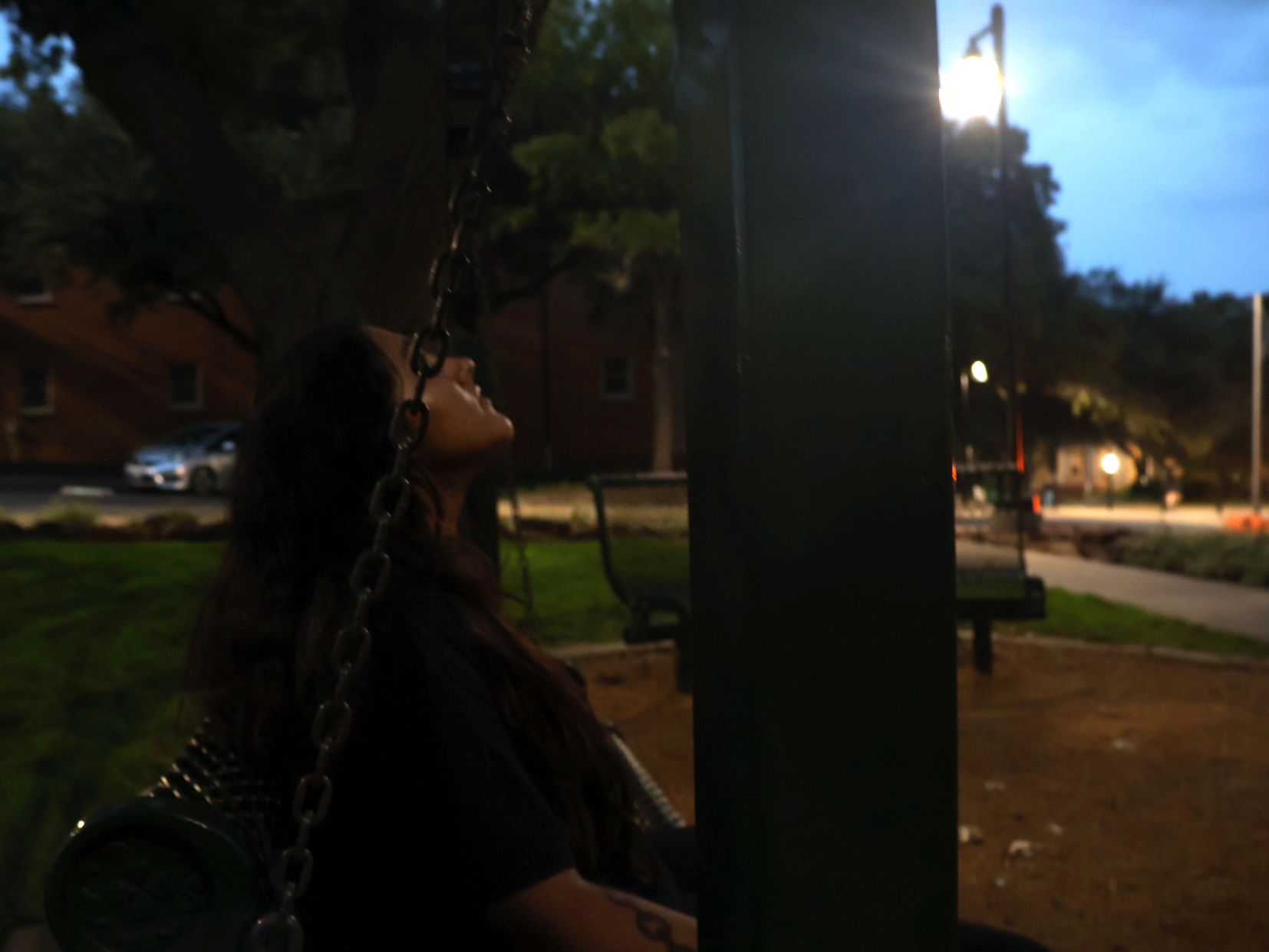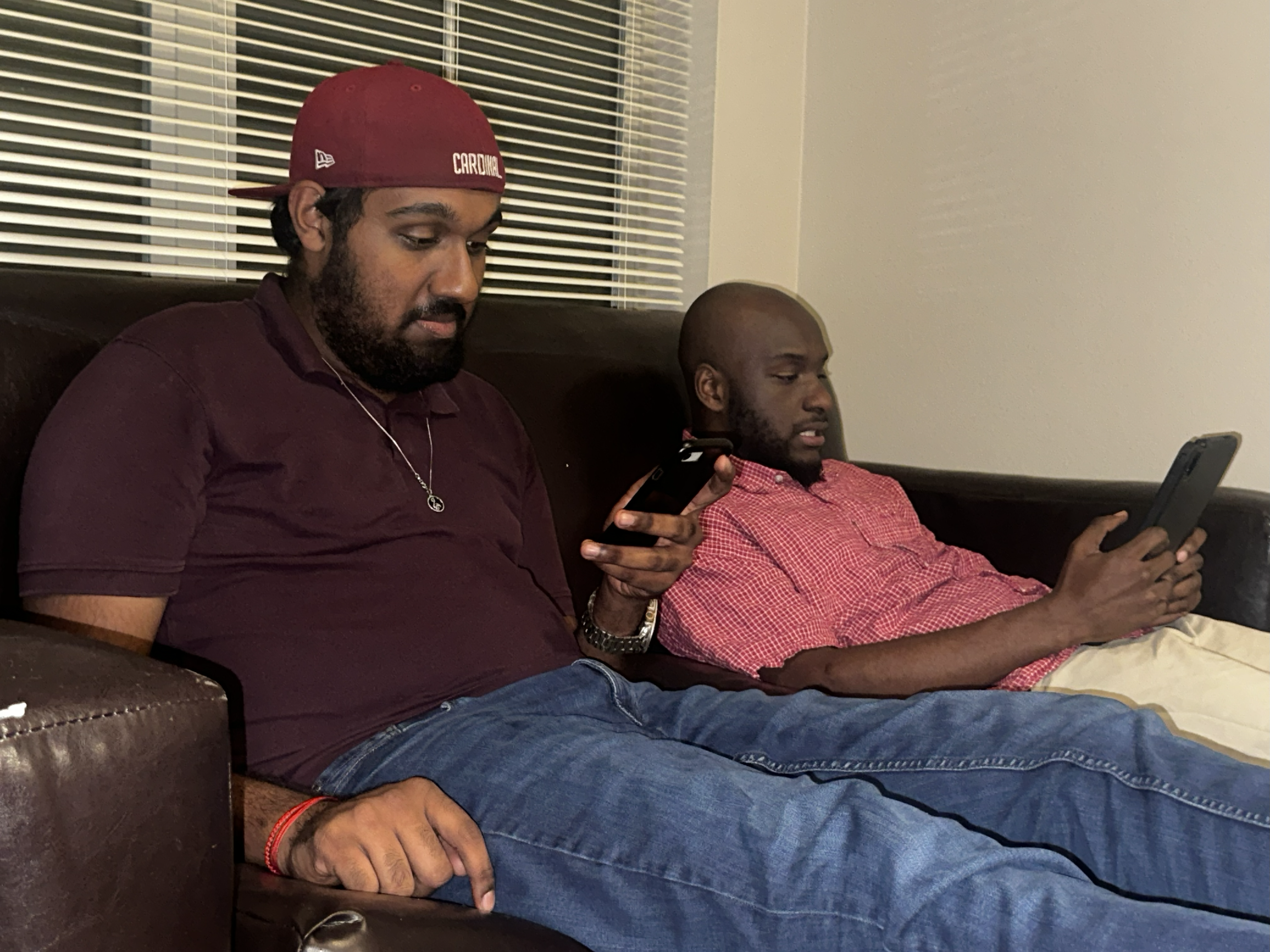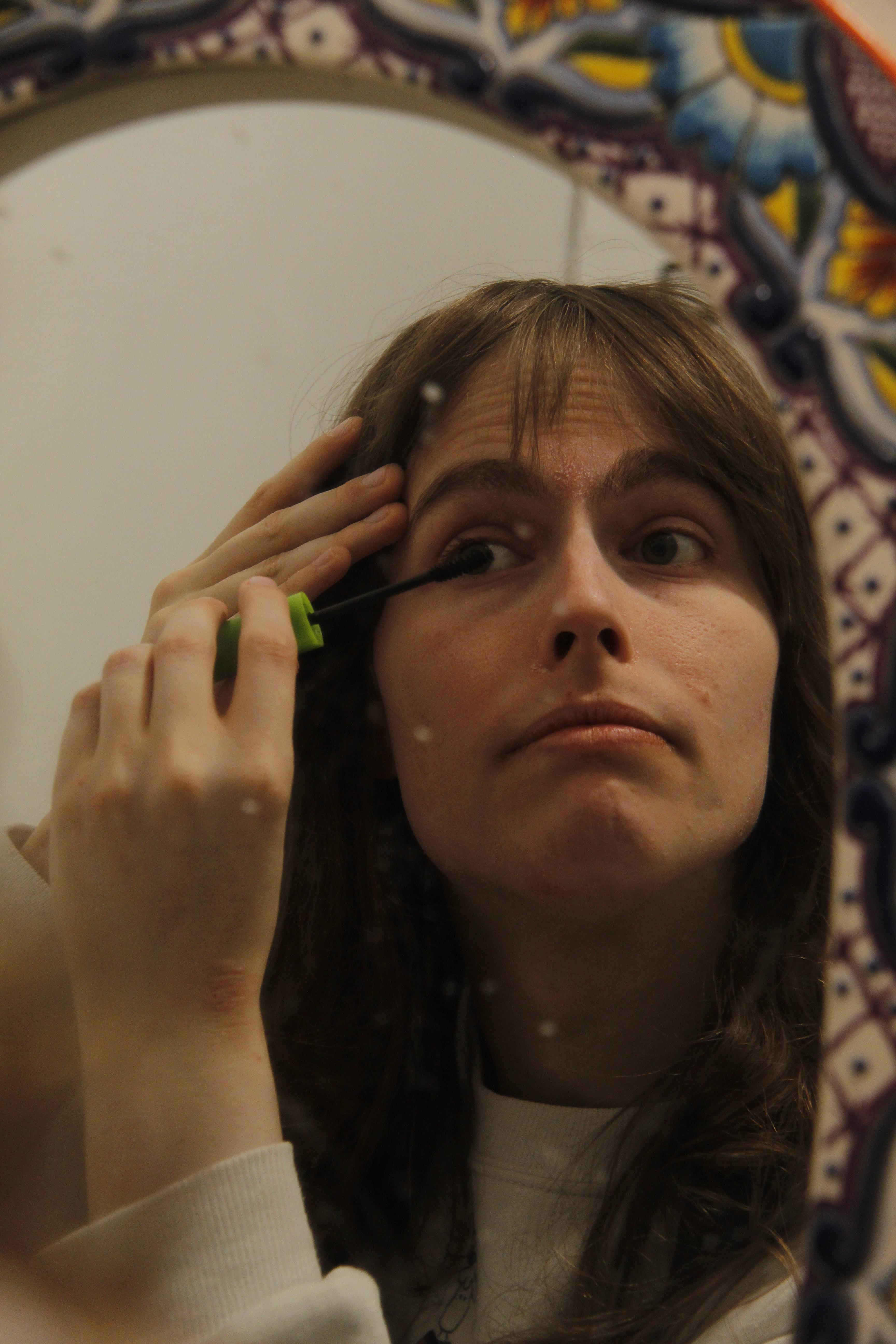
Lily Peery puts on mascara in her bathroom mirror as she gets ready for the day. Z Spears
CJ, a gender-fluid public high school teacher, feels they have to hide who they truly are, especially after the Texas Legislature passed Senate Bill 1999 this year.
This bill prohibits teachers from asking students their pronouns or calling them by a name other than what’s on the official roster. The bill was part of recent actions by conservative politicians and activists who have portrayed transgender people as threats and outcasts in an attempt to erase their existence.
“Most of my students are pretty understanding,” CJ said. “I have a couple that are really frustrated by this and don’t understand that this is not a me thing. If it were up to me, I would call everyone by whatever name they wanted me to call them.”
This doesn’t only affect the students who the bill targets, but also the teachers who have to enforce it. CJ, 27, feels they have to present as cisgender, otherwise they’re scared they might face repercussions from parents and the school board. Cisgender is a term used to define someone who is not transgender. CJ works with two other trans teachers who are out and get misgendered and discounted often.
“The transfeminine teacher gets called ‘him’ all the time and ‘Mr. So-and-so,’ whereas our transmasculine teacher, he gets called ‘Miss so-and-so' all the time,” CJ said. (CJ asked not to be identified by their full name because of fear of retaliation.)
Transfeminine and transmasculine are terms used to describe trans people that present masculine or feminine, but do not necessarily identify as a male or female.
“I know firsthand, you know, being trans myself and having a lot of trans friends, I know how important it is to have the basic respect of your name being acknowledged,” CJ said.
This discrimination, along with the negative treatment of trans people from the government and civilians alike, can be linked to anxiety and depression.
“It can bring up a lot of suicidality ... facing this potentially bleak future where you don't get to live the way that other people get to live or express yourself in the way that feels authentic to you,” therapist Veronica Cortez said. Cortez is local to Denton and has a large trans client base.
Many transgender adults feel disheartened by the government’s view toward them.
The American Civil Liberties Union is currently tracking 616 bills in the U.S. that are specific to regulating the existence of LGBTQ individuals. Ninety-seven of these bills come from Texas; that is about 15.7% of the bills nationwide. Eight of these deal with making it more difficult to obtain accurate IDs, 14 of these deal with healthcare restrictions, 40 deal with rights and freedoms in public schools and eight are public accommodation bans.
Blaise P., 24, a trans-masculine person from the Austin area, feels his anxiety has increased recently due to government actions and how those actions will result in that behavior being normalized in American society. He recalls being very disheartened by U.S. Rep. Nancy Mace, R-S.C. publicly saying anti-trans slurs as well as The Heritage Foundation pushing the FBI to label trans people as terrorists.
“All in all, it’s rather apparent they see the existence of trans people, and therefore my, existence as a very threat to their own,” he said. “I assume that would make anyone a little anxious.”
These feelings of anxiety in Blaise did not start because of these recent events, however. He is from a small town, where being trans is not a thing that is widely talked about. At around age 12 or 13 years old, he started dealing with insecurity regarding his identity, having feelings that there was something wrong with him. These thoughts gave fuel to bullies at school, a place he already did not fit in much.
“I was confused, isolated, and rejected by a lot of the peers I had at school,” he said. “They didn't understand and honestly, I didn't really either. I was a kid trying to figure myself out.”
Blaise isolated himself during this time, something which Cortez said is common among new trans people.
“A lot of people tend to withdraw because they're afraid of other people's opinions or just trying to figure it out for themselves, but isolating is also just going to increase depression and increase anxiety,” she said.
These feelings and isolationist actions continued through Blaise’s years at school, a time he remembers being very tumultuous.
He recalls not living a single day in his teenage years “that wasn’t wrecked with horrible anxiety and depression.”
While he was going through this hardship, he credits having an accepting family and making his experience of accepting himself a little easier. While his parents didn’t fully understand, they really did try to support him, even buying him rainbow everything despite him never having worn a rainbow.
Others would not be so lucky. Transgender woman Lily Peery, 22, had a vastly different coming out experience. Coming from a Christian home and going to a Christian private school, being trans was a not a topic of conversation that was taken seriously. Her peers, as well as her teachers, would make fun of the LGBTQ community like it was a joke.
She did not meet another trans person until coming to college. She talked with this person and a few months later, realized she was not cisgender. This realization caused a lot of anxiety for her, in part because she decided to talk to her mom about it early on. This conversation would draw a wedge between her and her family.
“I’ve not been cut off from my family, but our relationships have been drastically diminished,” she said.
Strained family relationships are common among Cortez’s trans clients.
“A lot of them have families that have different political and religious views than they do,” she commented. “And that often causes a lot of tension in terms of like non-acceptance from family or getting cut off by their family.”
While Peery’s anxiety was very high, realizing she was trans lessened the depression she had felt most of her life. She started to care more about taking care of herself, something she had struggled with before this realization.
Not being able to take care of oneself is one of the most prevalent symptoms of depression. Other symptoms include not getting much enjoyment out of life, lack of energy, taking part in fewer activities and feeling hopeless, according to the United Kingdom National Health Service. These symptoms make one’s life incredibly difficult, with many depressed people even struggling to get out of bed and take care of themselves.
Another symptom of depression is self-harm, a consequence that trans woman Taylor Delisle, 24, can relate to. In middle and high school, Delisle was very depressed and she self-harmed. She hated who she was and every time she thought about herself, it was something negative.
While she no longer feels as depressed as she once did, she does feel anxious a lot of the time due to her identity as a trans person.
“It is probably the reason for a solid 90% of my current anxiety. But I don’t think that’s any fault of being transgender; I think that it’s the fault of American culture and politics,” she said.
Something that causes DeLisle a lot of anxiety is public harassment. On several occasions, DeLisle has been called anti-LGBTQ slurs by people she didn’t know.
“I can think of five times off the top of my head, one of which was at the University [of North Texas],” she said.
Something as simple as going outside can be anxiety inducing for the trans community, especially those who do not look totally male or totally female.
Another anxiety inducing thing DeLisle experiences is the specific healthcare needs in order to continue her transition. Insurance does not always cover hormone blockers and hormone replacement therapy. Being 24, she is no longer on her parents’ insurance. Due to this, she is no longer on progesterone, a hormone that enhances feminization.
When a trans person feels they look like the gender they identify with, they are way less likely to experience anxiety and depression, according to the Journal of Sexual Medicine. Not only do they feel less anxiety and depression, but there is also a higher rate of self-acceptance.
Both DeLisle and Peery feel they would be a lot less anxious if they got out of Texas because they would not have to worry about bathroom bans or the banning of hormone replacement therapy.
Having a community and people to talk to is a big way to lessen anxiety and depression, especially for the trans community.
“I definitely think having a good support system is the number one thing that anyone can do,” Cortez said. “But having people that are either going through similar things as you at the same time, but also having people who have been there before, like further along in that process to kind of act as like a mentor is really helpful.”
She notes Denton specifically as having a big queer community and that in these trying times, it is important to rely on each other.

Z Spears is a freelance journalist and photographer in the North Texas area. Their work has been published in newspapers like the Denton Record Chronicle and the North Texas Daily. Spears also did freelance photography for Baddies Bizarre, a drag show in Denton, Texas. They are currently completing their Bachelor of Arts in Journalism at the Mayborn School of Journalism.